

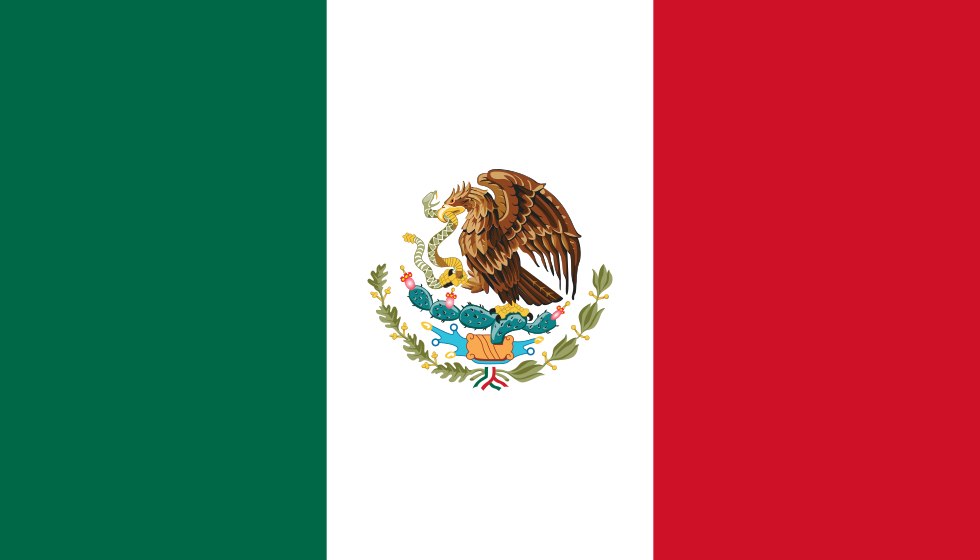
Mexico
Mexico (MEX)
Overview
The Identity - What Mexico Actually Represents
Mexico established themselves as consistent CONCACAF contenders without quite reaching elite global status. The program focuses on regular World Cup qualification, competitive tournament performances, and gradual development of playing identity. Success means punching above weight class against better-resourced opponents. National team soccer operates differently than club competitions - players gather for brief windows, coaches work with whoever's available regardless of form, and tournament formats create knockout drama where single matches determine legacy.
The national team culture develops through shared identity and collective purpose that transcends club rivalries. Players representing Mexico carry expectations from entire nations. This pressure creates unique dynamics - some players elevate performance for country, others struggle under nationalist spotlight. Managing these psychological factors separates successful international coaches from tactically knowledgeable managers who never translate club success to international stage.
What defines Mexico in 2025? Understanding international soccer's unique demands - tournament preparation, squad rotation across congested schedules, tactical adaptation without daily training sessions. The program must balance immediate tournament results with long-term player development, creating sustainable success rather than isolated tournament runs.
The Current State - Beyond Win-Loss Records
Mexico's current situation reflects broader patterns among competitive national teams. Player pools mix domestic-based talent with overseas professionals playing in stronger leagues. Tactical approaches balance defensive organization with attacking ambition. Tournament expectations center on advancing from group stages and competing with higher-ranked opponents. Results fluctuate based on opponent quality, venue, and tournament context. Friendly matches serve development purposes while competitive qualifiers demand results-oriented approaches.
Analyzing Mexico's performances requires accounting for factors club analysis ignores. Player familiarity develops slowly when squads gather only for international windows. Home advantage matters enormously when passionate supporters create intimidating atmospheres. Tournament draw luck significantly influences advancement potential regardless of team quality.
Key player availability determines realistic expectations. When Mexico's best talents stay healthy through club seasons and arrive fit for tournaments, competitive potential maximizes. When injuries affect stars or form dips during crucial windows, even deep squads get tested. This dependence on peak timing for handful of players creates vulnerability no tactical system completely overcomes.
The Player Pool - Who Actually Matters
National team player evaluation differs from club analysis. The most important players combine individual quality with international experience and big-game mentality. These aren't always the biggest club stars - international soccer rewards players who adapt quickly, perform under nationalist pressure, and elevate during knockout tournaments.
Squad depth for Mexico creates interesting dynamics. The starting XI reflects current form and tactical fit, but tournament success requires rotation across congested schedules. Depth quality determines whether coaches can rest starters in early matches or must risk fatigue in crucial games. This squad management becomes critical during month-long tournaments.
Generational transitions present ongoing challenges. Mexico must integrate young talents while veterans still contribute, creating smooth transitions rather than abrupt rebuilding periods. Managing these transitions without sacrificing competitive results requires careful squad selection and tactical continuity across coaching cycles.
Tactical Approach and Coaching Philosophy
International tactics differ from club soccer due to limited preparation time. Mexico's approach must be simple enough for quick implementation yet sophisticated enough for tournament success. The best international teams build clear identities that players understand instinctively rather than requiring complex tactical instructions.
Coaching at international level requires different skills than club management. International coaches can't recruit players or work daily on tactical details. Success comes from squad selection, tactical clarity, psychological management, and in-game adjustments. Mexico's coaching staff must maximize brief preparation windows while creating competitive game plans.
Tournament preparation presents unique challenges. International windows allow only days for tactical work before crucial matches. Mexico must balance experimentation in friendlies with result-oriented approaches in competitive games. This preparation strategy determines tournament readiness more than underlying player quality.
The Challenges Nobody Discusses Openly
International soccer's political dimensions affect Mexico beyond purely sporting considerations. Qualification formats, tournament draws, hosting decisions, and refereeing assignments all carry political undercurrents. Navigating these realities while maintaining competitive focus requires diplomatic skill alongside tactical knowledge.
Player commitment levels vary across national team programs. Some players prioritize club careers and approach international duty as obligation rather than honor. Others embrace national team representation and elevate performance for country. Mexico's success depends partly on fostering genuine commitment rather than begrudging participation from star players.
Fan expectations for Mexico often disconnect from realistic capabilities. Supporters remember previous tournament successes and demand similar results without acknowledging how competitive international soccer has become. Managing these expectations while building sustainable programs requires honest assessment and communication that national team administrators often avoid.
The compressed tournament format creates enormous pressure and variance. Mexico can dominate qualifying yet exit major tournaments on penalty shootouts or single mistakes. This format rewards peak timing and tournament experience more than consistent quality, creating results that don't always reflect true team strength.
The tactical evolution at Mexico reflects broader soccer trends where rigid formations give way to fluid systems requiring positional versatility. Modern soccer rewards players who understand multiple roles rather than specialists locked into single positions. Mexico's coaching staff must balance system consistency providing familiarity with tactical flexibility allowing adaptation to different opponents. This evolution requires time, patience, and acceptance that growing pains accompany systemic changes.
Contract management at Mexico creates ongoing challenges where timing mismatches between sporting and financial optimization cause problems. Selling players when market values peak often means losing key contributors during competitive periods. Extending contracts before values rise protects assets but commits wages based on past performance rather than future contribution. These tensions between sporting ambition and financial sustainability create constant dilemmas where every decision involves tradeoffs and compromise rather than clearly optimal choices.
Home advantage at Mexico stems from multiple factors beyond just passionate supporter attendance creating intimidating atmospheres. Familiarity with field dimensions and surface conditions provides marginal advantages that accumulate over seasons. Referee decisions subtly favor home teams through unconscious bias rather than deliberate corruption. Travel fatigue affects visiting opponents more than rested home sides who sleep in familiar beds and maintain regular routines. These small edges accumulate into meaningful home-field advantage that Mexico must maximize given the difficulties inherent in away matches against quality opposition.
The Verdict - Realistic Expectations for 2026 World Cup Cycle
Consistent tournament qualification and competitive group stage performances. Occasional advancement to knockout rounds represents significant achievement. Building playing identity that maximizes available talent rather than mimicking elite nations with superior player pools. Tournament success requires not just quality but timing - peaking during crucial windows, staying healthy through qualifying, and catching favorable draws. These factors create variance that makes prediction difficult.
Medium-term trajectory depends on youth development and player pathway quality. Mexico's future competitiveness relies on producing next generation of talent through improved coaching infrastructure, stronger domestic leagues, and opportunities for young players to develop professionally. These structural factors matter more than individual tournament results.
Long-term direction for Mexico depends on maintaining or improving current standing within CONCACAF hierarchy. Sustained success requires institutional investment in youth development, coaching education, and competitive opportunities at all age levels. National teams rarely transform overnight - improvement comes through patient development programs that create talent pipelines.
Accepting realistic expectations doesn't mean surrendering ambition. It means focusing on controllable factors - player development, tactical preparation, squad chemistry, mental conditioning. Mexico can control these elements while acknowledging competitive realities that limit ceiling. Success comes from maximizing potential within structural constraints rather than expecting miracles. That's international soccer in 2025 for programs building sustainable competitiveness.