

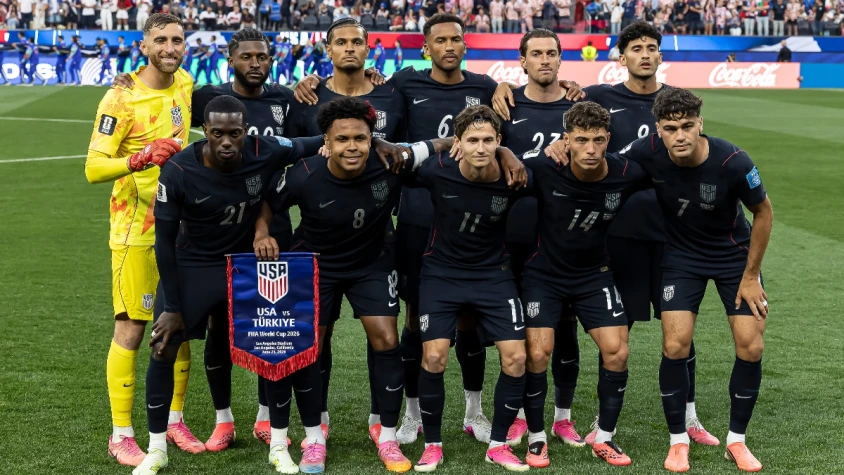
Here's a number I keep circling back to: 26. Not the roster size — every World Cup squad carries 26 now — but the number of Pochettino's players attached to a top-flight club. All of them. Sports Illustrated flagged before the tournament that, for the first time in the modern era, every US player is in the top division of his country, and once Coventry City clinched promotion back to the Premier League in April after a 25-year absence, it became literally true from the first goalkeeper to the last forward off the bench.
That's the headline. The map underneath it is the interesting part, because "they play in Europe" is the kind of shorthand that hides more than it tells you. So let me actually lay it out.
The European core
Seventeen of the 26 play in Europe, and the spine — the players who decide knockout games — sits in the biggest leagues. Italy gives you the two leaders: Christian Pulisic at AC Milan and Weston McKennie at Juventus, a Milan-to-Turin axis carrying most of the attacking and midfield load. England has five: Chris Richards at Crystal Palace, Antonee Robinson at Fulham — a former Fulham player of the year and, by the underlying numbers, one of the Premier League's better attacking left-backs — Tyler Adams at Bournemouth, Brenden Aaronson at Leeds, and Haji Wright, who just dragged Coventry back to the top flight.
France accounts for three: Folarin Balogun at Monaco, Mark McKenzie at Toulouse, and Tim Weah, on loan at Marseille from Juventus — the son of George Weah, the Ballon d'Or winner who later became president of Liberia. Germany has three, two of them teammates: Joe Scally and Gio Reyna both at Borussia Mönchengladbach, with Malik Tillman at Bayer Leverkusen. Spain has one in Alex Freeman at Villarreal. And the Netherlands gives you another pair of clubmates — Sergiño Dest and Ricardo Pepi, both at PSV Eindhoven.
The MLS eight
Now the part the discourse usually fumbles. Eight players come from MLS, and the lazy read is that they're filler — depth, ballast, bench fodder. Look closer. Tim Ream, the 38-year-old captain, is at Charlotte FC. Two of the three keepers are domestic — Matt Turner at New England and Matt Freese at New York City FC, with Chris Brady of the Chicago Fire third. Add Miles Robinson at FC Cincinnati, Max Arfsten at the Columbus Crew, Cristian Roldan at Seattle and Sebastian Berhalter, whose long-range strike against Turkiye capped the best individual season of his career at the Vancouver Whitecaps.
Here's my actual take: the goal was never zero MLS players, it's the right ones in the right jobs. The US is using its domestic league the way a healthy pipeline should — as the home for veteran leadership, the goalkeeping room, and squad-building. The dead-rubber loss to Turkiye, with an MLS-flavored XI, will get cited as proof the gap is real. I'd argue it shows the opposite. That's a depth chart, not a drop-off.
The two outliers
Then there are the two who fit none of the usual boxes, which is exactly why I like them. Auston Trusty is at Celtic, a back-to-back Scottish champion, a left-footed center-back whose header opened the scoring against Turkiye. He and Freese are both from Delaware County, Pennsylvania — a detail Trusty couldn't resist after the Australia win, posting that they were "just two delco boys playing in the World Cup." Small world, big stage.
The other is Alejandro Zendejas, the squad's only Liga MX player, at Club América. He was born in Ciudad Juárez, grew up across the border in El Paso, and represented Mexico before completing a one-time switch to the US in 2023. Of all 26, he might earn his living in the most relentlessly scrutinized weekly environment of anyone — playing for one of the most pressure-soaked fanbases in the Americas is its own kind of tournament prep.
What the map tells you
Step back and the distribution is a story about where American talent has gone. The creative and physical heart of the team — Pulisic, McKennie, Balogun, Adams, Robinson, Richards — is in Europe's top leagues, mostly in attacking, wide, and ball-winning roles. MLS supplies the spine of stability around it. Two outliers stretch the map to Glasgow and Mexico City. It's the most European, most top-flight squad the US has ever taken to a World Cup — and that's not a marketing line, it's just what the team sheet says when you read it carefully.
The full map, all 26
| Every player in Pochettino's World Cup squad, by club, league and country PlayerPos.ClubLeagueCountry | ||||
| Matt Turner | GK | New England Revolution | MLS | USA |
| Matt Freese | GK | New York City FC | MLS | USA |
| Chris Brady | GK | Chicago Fire | MLS | USA |
| Sergiño Dest | DF | PSV Eindhoven | Eredivisie | Netherlands |
| Chris Richards | DF | Crystal Palace | Premier League | England |
| Tim Ream (C) | DF | Charlotte FC | MLS | USA |
| Antonee Robinson | DF | Fulham | Premier League | England |
| Mark McKenzie | DF | Toulouse | Ligue 1 | France |
| Miles Robinson | DF | FC Cincinnati | MLS | USA |
| Alex Freeman | DF | Villarreal | La Liga | Spain |
| Joe Scally | DF | Borussia Mönchengladbach | Bundesliga | Germany |
| Max Arfsten | DF | Columbus Crew | MLS | USA |
| Auston Trusty | DF | Celtic | Scottish Premiership | Scotland |
| Weston McKennie | MF | Juventus | Serie A | Italy |
| Tyler Adams | MF | Bournemouth | Premier League | England |
| Malik Tillman | MF | Bayer Leverkusen | Bundesliga | Germany |
| Sebastian Berhalter | MF | Vancouver Whitecaps | MLS | Canada |
| Cristian Roldan | MF | Seattle Sounders | MLS | USA |
| Christian Pulisic | FW | AC Milan | Serie A | Italy |
| Folarin Balogun | FW | AS Monaco | Ligue 1 | Monaco |
| Ricardo Pepi | FW | PSV Eindhoven | Eredivisie | Netherlands |
| Tim Weah | FW | Marseille (loan) | Ligue 1 | France |
| Haji Wright | FW | Coventry City | Premier League | England |
| Brenden Aaronson | FW | Leeds United | Premier League | England |
| Gio Reyna | FW | Borussia Mönchengladbach | Bundesliga | Germany |
| Alejandro Zendejas | FW | Club América | Liga MX | Mexico |
Read down the table and two small things jump out: the two sets of clubmates — Dest and Pepi at PSV, Scally and Reyna at Mönchengladbach — and the sheer spread, nine leagues across ten countries once you count Monaco and Canada separately. For a program that not long ago sent squads stitched together from the domestic league and a handful of Europe-based names, that's the real marker of how far the talent pool has traveled.