

When losing a final becomes the second-worst thing that happens
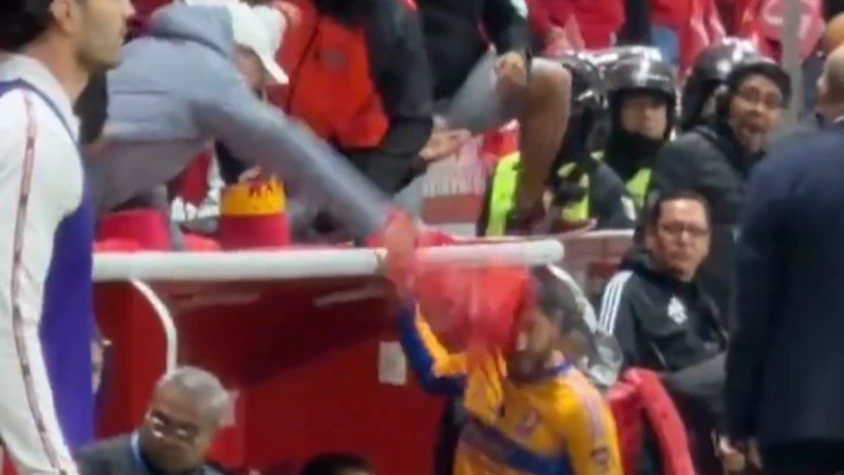
André-Pierre Gignac just experienced one of the most surreal nights in his decorated Mexican career. First, his Tigres side lost the Liga MX Apertura final to Toluca 9-8 on penalties after a dramatic 2-1 comeback. Then, while leaving the pitch, a Toluca supporter sitting directly behind the bench struck him with a flag. Security intervened quickly, but the damage was done—not physically, as Gignac remained relatively composed, but in terms of what this moment represents about fan behavior and stadium safety in Mexican football.
This wasn't a pitch invasion or a momentary lapse during chaos. This was a deliberate attack on a player by someone positioned close enough to the action that security should've prevented any contact whatsoever. The fact that a supporter had access to strike a player exiting the field exposes serious lapses in safety protocols. Gignac has spent nearly a decade building legendary status in Liga MX, becoming one of the most respected foreign players in the league's history. He deserved better than this disgraceful ending to a final.
The match that slipped away
Before the attack dominated headlines, Tigres actually controlled large portions of this final. Gignac's involvement in the opening goal—a deflected free kick finished by teammate Fernand Gorriaran—put Tigres ahead and positioned them for a sixth Mexican title. For a player who's won everything domestically in Mexico, adding another championship would've further cemented his legacy. Instead, Toluca clawed back with two quality finishes: Helinho's curling strike from 20 yards, then Paulinho's close-range effort exploiting lax marking.
Tigres created chances to regain control but couldn't convert when it mattered. The match went to penalties, stretching through both teams' shooters until even the goalkeepers had taken their attempts and missed. Alexis Vega finally ended it for Toluca at 9-8, delivering a title while leaving Gignac and Tigres devastated. Penalty shootouts are cruel, random, and often unjust—but that's tournament football. What happened afterward had nothing to do with competition and everything to do with security failure.
— Redes TUDN (@redes_TUDN) December 15, 2025
Why Gignac's reaction matters
Gignac stayed calm after being struck. That restraint likely prevented the situation from escalating into something even uglier. But here's the problem: players shouldn't need to exercise restraint when they're attacked. The responsibility lies entirely with stadium security, event organizers, and the league to ensure players can leave the field without being assaulted. The fact that this supporter was close enough to make contact means multiple security layers failed.
This isn't about Gignac being tough enough to handle it—it's about establishing a basic standard where physical attacks on players don't happen. If a fan can strike Gignac with a flag, what stops the next person from throwing something more dangerous? What prevents escalation during a more volatile moment? These incidents don't exist in isolation. They normalize behavior that should be immediately unacceptable in any professional sporting environment.
The broader context Liga MX can't ignore
Mexican football has dealt with fan violence issues for years, from discriminatory chants to objects thrown onto the pitch to occasional pitch invasions. This attack on Gignac adds another entry to a list that keeps growing despite repeated promises to address safety concerns. The league will likely issue a statement condemning the incident, maybe fine Toluca, possibly ban the individual supporter. But unless structural changes improve security protocols and accountability, these incidents will continue.
Gignac has given Liga MX nearly a decade of elite performances, becoming one of the league's most recognizable ambassadors internationally. He's scored over 200 goals, won multiple titles, and consistently delivered in high-pressure moments. The league owes him—and every player—an environment where they can compete without fearing physical attacks from fans. That's not asking for special treatment. That's asking for the bare minimum standard of professional sports.
The penalty shootout nobody will remember correctly
Lost in the aftermath is the actual penalty drama: a shootout that extended through both squads and required both goalkeepers to take attempts before Vega sealed Toluca's victory. That's rare, dramatic, and should've been the lasting memory from this final. Instead, the narrative shifted entirely because one supporter couldn't control themselves and security couldn't prevent contact.
Tigres had their chances to win in regulation and extra time but couldn't capitalize. That's football. Losing on penalties is brutal but part of tournament reality. Gignac has experienced enough finals to understand that disappointment. What he shouldn't have to understand is why leaving the pitch after giving everything in a final means risking physical assault from someone who should've been stopped long before getting within striking distance.
What happens next won't be enough
Liga MX will investigate. The supporter will likely face consequences. Toluca might get fined. But unless the league fundamentally rethinks how it manages fan proximity to players, how it trains security personnel, and how it holds clubs accountable for preventable incidents, nothing changes. Gignac's composure prevented this from becoming worse, but that's not a solution—it's a player doing security's job for them.
The French striker deserved to leave this final disappointed but safe. He got one of those things. And that's a failure that goes well beyond one rogue supporter's actions—it's a systemic problem that keeps manifesting because the consequences never match the severity of allowing fans to physically attack players.