

When accepting reality becomes the story
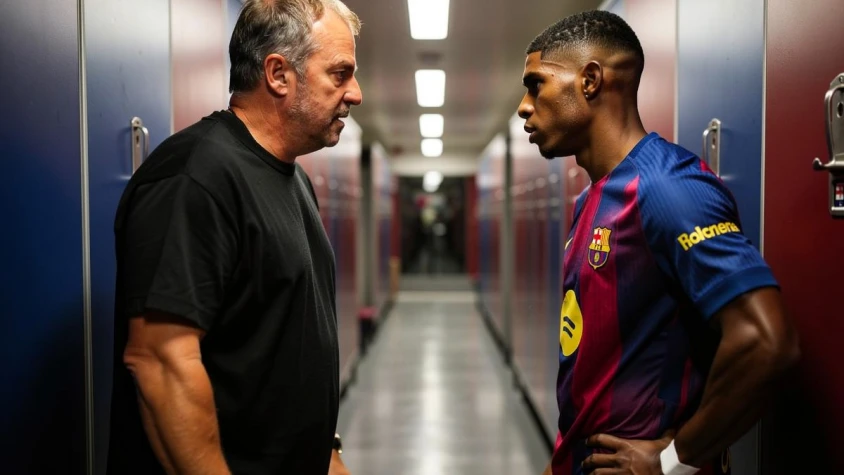
Marcus Rashford has spent the last month sitting on Barcelona's bench, and apparently that's worth celebrating. Hansi Flick praised the Manchester United loanee for handling reduced playing time professionally, pointing to a conversation where Rashford told him, "Boss, you don't have to tell me about your decisions. The most important thing is the team. We have to win the three points. The rest is not that important." That's the correct response from a squad player who understands his role. It's also the baseline expectation for any professional footballer, not some extraordinary display of character.
Rashford arrived at Barcelona in the summer after a disastrous end to his Manchester United career under Ruben Amorim, who publicly questioned his training efforts and commitment. He initially made an impact in Catalonia—six goals, four in the Champions League—before injuries to other attackers gave him opportunities. But once Raphinha returned from a hamstring issue and Robert Lewandowski reclaimed his starting spot, Rashford became a rotation option. Four of his last five appearances have come off the bench. That's not a crisis. That's a 28-year-old forward adjusting to life as a squad player at a club with deeper talent than Manchester United.
The character questions that followed him from Manchester
Rashford's professionalism at Barcelona stands out because his final months at United were defined by the opposite narrative. Amorim dropped him for disciplinary reasons, publicly criticized his effort in training, and essentially froze him out before the January loan to Aston Villa. Then came the Barcelona move this summer, where Flick also disciplined him in September for being late to a team meeting. The pattern suggested a player whose off-field issues were undermining his career.
But here's the thing: accepting a reduced role gracefully isn't proof of reformed character. It's proof that Rashford understands his current standing in football. He's not a guaranteed starter at an elite club anymore. He's a useful option who can contribute goals in cup competitions and provide depth when needed. That realization doesn't require extraordinary maturity—it requires basic self-awareness. Flick praising him for not complaining about being benched feels like lowering the bar to ground level and celebrating when someone steps over it.
The difference between acceptance and ambition
Rashford told reporters last week that he's "enjoying every step" at Barcelona and feels "at home" in Catalonia. He emphasized the honor of playing for Spain's biggest club and his desire to help the team win. Those are perfectly fine comments from a player trying to project positivity. But they're also the comments of someone who's accepted that his peak years are behind him and his role now is contributing where possible rather than demanding a starting spot.
That's fine if Rashford is content with that trajectory. But let's not pretend this is the career arc anyone envisioned when he was scoring 30 goals for United just two seasons ago. He's 28 years old, theoretically in his prime, and he's celebrating being a rotational option at Barcelona because the alternative was being frozen out entirely at Manchester United. The praise from Flick isn't about Rashford elevating his game—it's about him lowering his expectations to match his current reality.
The manager's perspective makes sense but doesn't inspire confidence
Flick's comments highlight why Rashford is valuable to Barcelona's squad depth. He doesn't complain publicly, he stays ready when called upon, and he's produced meaningful goals in Europe. Those are useful qualities for a rotation player. But Flick also admitted Rashford "had to adapt a little bit" early on and is only now "at his best level." That phrasing suggests Rashford struggled initially to meet Barcelona's standards and needed months to reach a baseline of competence.
For a player who was supposedly one of the Premier League's elite forwards just two years ago, needing half a season to adapt to being a squad player at Barcelona isn't a ringing endorsement. It suggests either that Rashford's decline has been steeper than anyone realized or that the mental and tactical demands of playing in Spain exposed weaknesses that were masked at United. Either way, the fact that his manager's highest praise is "he doesn't complain about being benched" tells you everything about where Rashford's career currently stands.
The Barcelona loan that might define his future
Rashford's stint at Barcelona is now the clearest indicator of what his career trajectory looks like post-United. If he can maintain this squad role, contribute important goals in rotation, and avoid the disciplinary issues that plagued him at Old Trafford, he'll likely secure another contract somewhere decent. But the days of Rashford being a guaranteed starter at a top-six Premier League club or a major European side are over unless something dramatic changes.
The question now is whether Rashford accepts this reality permanently or views it as temporary. His comments suggest acceptance, but his agent's previous statements about seeking regular first-team football suggest otherwise. Barcelona might keep him if the loan becomes permanent, but only as a depth piece. Manchester United almost certainly won't bring him back. That leaves Rashford in limbo—too talented to disappear entirely, not consistent enough to command a starting role at an elite club.
Why praising basic professionalism feels hollow
Flick's praise for Rashford's attitude is technically accurate but ultimately underwhelming. Yes, Rashford is handling a reduced role professionally. But that's what professional footballers are supposed to do. The fact that this behavior is being highlighted as noteworthy reveals how low expectations have fallen. Two years ago, Rashford was scoring 30 goals for Manchester United. Now his manager is publicly celebrating him for not complaining about sitting on the bench.
That's not a redemption arc. That's a slow-motion decline dressed up as maturity. Rashford deserves credit for staying positive and contributing when called upon. But let's not confuse acceptance with ambition or mistake professionalism for excellence. He's doing what's required to remain employed at Barcelona, nothing more. And if that's the standard we're celebrating, it says far more about how far Rashford has fallen than how much he's grown.


