

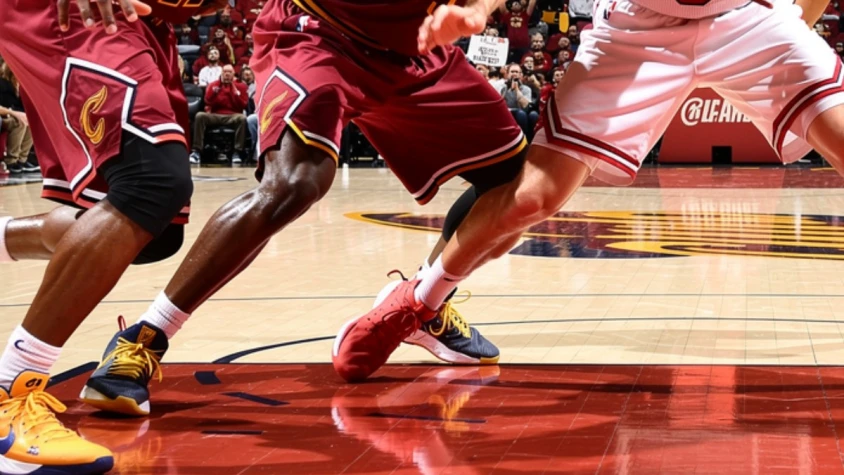
The Cavaliers have forgotten how to close games
Cleveland lost 127-111 to the Chicago Bulls, who came into this game with one win in their last nine. That's not a bad night, that's a pattern. The Cavaliers trailed by 13 in the third quarter, clawed back to within seven heading into the fourth, and then completely fell apart. The final quarter was basketball malpractice: 9-for-23 shooting, 3-for-10 from deep, five turnovers, and defense that might as well have stayed in the locker room.
Donovan Mitchell scored 32 points and it didn't matter. When your best player gives you that kind of output and you still lose by 16 to a team actively tanking, something's fundamentally broken. This isn't about Mitchell's production—it's about everyone else forgetting how to play winning basketball when the game tightens up. The Cavaliers went into that fourth quarter needing stops and execution. They provided neither.
Josh Giddey reminded everyone why OKC gave up on him
Josh Giddey posted a triple-double for the Bulls, and before anyone crowns him, let's remember this is his second signature game in Chicago after being shipped out of Oklahoma City for a reason. Giddey's a talented passer who can't shoot and gets hunted on defense. He's perfect for a rebuilding team that needs playmaking and doesn't care about efficiency. Against Cleveland's collapsing defense, he looked like prime Magic Johnson. That says more about the Cavaliers than Giddey.
The Bulls are 2-8 in their last ten games. They're selling at the deadline. They have zero defensive identity. And they just put up 127 points on a team with championship aspirations. That's embarrassing for Cleveland, not impressive for Chicago. Giddey made the plays available to him because the Cavaliers couldn't be bothered to show up defensively in crunch time.
Minnesota got outworked at home without their best player
The Timberwolves lost 116-110 to Memphis at Target Center, and the most telling stat isn't the final score—it's the 14-2 run the Grizzlies used to flip a nine-point deficit in the third quarter. Minnesota was up 76-67 midway through the third and proceeded to get punched in the mouth by a Memphis team playing without Ja Morant. Anthony Edwards was out for the Wolves, but that's not an excuse when you're at home and the opponent is missing their best player too.
Jaren Jackson Jr. dropped 28 points and 12 rebounds, doing exactly what elite two-way players do: dominating both ends when the game matters. Rudy Gobert had a double-double for Minnesota and it didn't matter because nobody else could match Memphis's intensity. That's a coaching problem and an effort problem.
Jock Landale was the difference maker
Here's where this game got decided: Jock Landale hit his fourth three-pointer of the night late in the fourth quarter to give Memphis a 109-103 lead with a minute left. Landale isn't a star. He's a backup center who can stretch the floor. But he was hyper-active during that crucial 14-2 run, making hustle plays and hitting shots when Minnesota's defense sagged off him.
That's what kills you in the NBA. It's not always the superstars—it's the role players you disrespect who punish you. Minnesota treated Landale like he couldn't hurt them, and he buried them. Then Jackson finished the job with a floater to ice it. Memphis played smarter and tougher. The Wolves played like they expected to win without earning it.
Memphis is 4-1 in their last five for a reason
The Grizzlies are building something real. They're winning ugly games on the road without their franchise player. That's the mark of a well-coached, connected team. Taylor Jenkins has them playing with an edge that Minnesota couldn't match. When you win at Target Center without Morant, you're not lucky—you're legitimately good.
Memphis's depth is legit. Jackson, Desmond Bane, and role players like Landale are executing a defensive system and making timely shots. They're not perfect, but they're scrappy and disciplined. That beats talent when the talented team doesn't show up ready to fight.
What these losses actually mean
For Cleveland, this is concerning. They've now dropped multiple winnable games to inferior opponents. The fourth-quarter execution is a real problem. When you can't close against the Bulls, how are you supposed to beat Boston or Milwaukee in a playoff series? Mitchell can't do it alone, and the supporting cast is too inconsistent. J.B. Bickerstaff needs answers, because right now his team folds under pressure.
For Minnesota, losing at home without Edwards is understandable but not acceptable when Memphis is also missing Morant. The Wolves are supposed to be contenders. Contenders don't get outworked at home by a team on the second night of a back-to-back. Chris Finch's squad has talent, but talent without effort gets you first-round exits.
The bottom line
Two supposed contenders got exposed in the same night by teams that wanted it more. Cleveland's fourth-quarter collapse against a tanking Bulls team is inexcusable. Minnesota getting outworked at home by Memphis without their respective stars is a red flag. Both games had the same problem: the favorites assumed showing up was enough. The Grizzlies and Bulls proved otherwise. In the NBA, effort beats talent when talent doesn't feel like competing. Both the Cavaliers and Wolves got that lesson delivered brutally.