

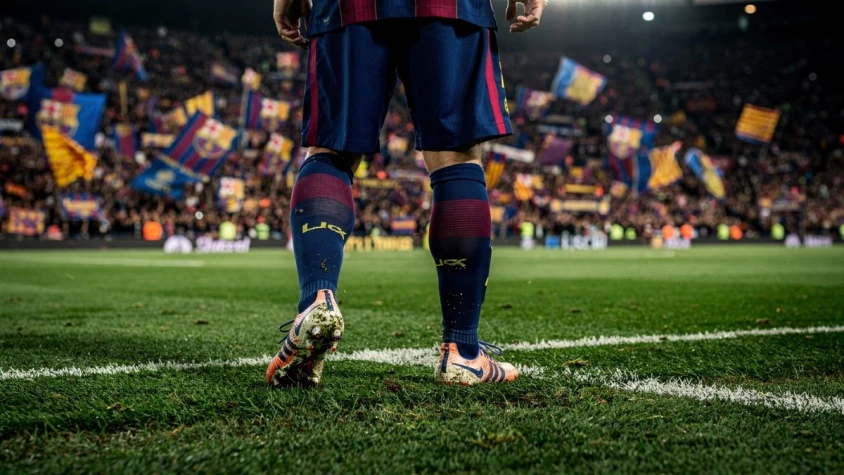
Christensen's injury breaks a system that was already fragile
Andreas Christensen suffered a serious ligament injury to his knee. He's done for several months. That's the reality Barcelona has to accept. The Dane was supposed to be a stabilizing force in central defense alongside Ronald Araujo. Now he's gone, and the problems pile up immediately.
Araujo is a question mark. He's expected back after Christmas, but the club still doesn't know if he's fully recovered from both physical and psychological issues. Eric García, who should be playing center-back, has been pushed into midfield because Barcelona needed him elsewhere. That leaves Hansi Flick with almost no legitimate options in the middle of defense. It's a mess.
Why Barcelona can't just buy their way out
The obvious solution is to sign a center-back in January. Get someone experienced, someone proven. Problem: Barcelona is still handcuffed by Financial Fair Play regulations. Yes, they can use 80 percent of Christensen's salary to bring in a replacement if his absence exceeds four months. But the math doesn't solve the real issue—there aren't convincing targets available on the winter market that Barcelona can actually afford without breaking their already-fragile structure.
The transfer market in January is a graveyard. You're picking through leftovers. Either teams want to keep their good players until summer, or they're selling you their problems. Barcelona knows this. They're not going to panic and buy someone who's going to be a liability in three years. That would be the old Barcelona decision-making. So instead, they're looking internal.
Álvaro Cortés is not some desperate stopgap
In the span of 24 hours, Barcelona determined that Álvaro Cortés from Barcelona Atlètic is the answer. On paper, this sounds like panic. In reality, it's the opposite. Cortés is 20 years old, left-footed, technically clean, and he's been performing at a high level with the reserve team. More importantly—he's a leader. He distributes the ball well. He doesn't make careless mistakes defensively.
This is exactly what the Masia is supposed to produce. A young defender who comes through the academy, gets minutes in a competitive environment with the B team, and steps up when the first team needs him. Cortés checks every box. He's not a prospect you're hoping will develop. He's a kid who's already developing at a legitimate level and just needs the opportunity to prove it at first-team speed.
Barcelona doubles down on their academy instead of the market
This decision matters because it signals something about how Barcelona is trying to operate now. They're not rich. They can't spend fifty million on a stopgap defender. So instead of compromising their structure, they're using their greatest asset—their academy. The Masia has produced some of the best defenders in football history. Puyol. Piqué. Busquets in midfield. The DNA is there.
Promoting Cortés doesn't cost a euro. It doesn't break any wage structure. It doesn't create a long-term financial problem. He either develops into a legitimate first-team player or he becomes good depth. Either way, Barcelona hasn't compromised their future by overpaying for someone on the winter market.
The real test is Gerard Martín
Barcelona has already proven they can develop defenders quickly. Gerard Martín has been repositioned to left-center-back and it's working. He's young, he's learning on the job, and the team is staying competitive. Cortés following that trajectory isn't wishful thinking. It's precedent.
The bigger picture: Christensen's injury is serious, but it's not season-ending for Barcelona because they're willing to trust their academy. That's not desperation. That's confidence in your system. It's the smart play.

