

When family makes the statement publicly
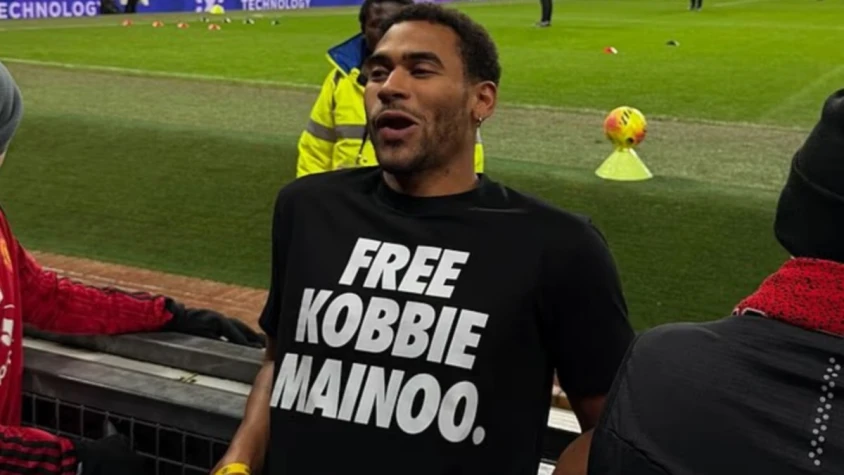
Jordan Mainoo-Hames, Kobbie Mainoo's brother and former Love Island contestant, showed up at Old Trafford on Monday wearing a black shirt reading "Free Kobbie Mainoo" during Manchester United's chaotic 4-4 draw with Bournemouth. The message was unmistakable: Kobbie isn't getting the game time his family believes he deserves under Ruben Amorim. The 20-year-old midfielder came off the bench in the second half but hasn't started a Premier League match this season, accumulating just 212 minutes across all competitions. That's a dramatic fall for a player who was considered one of United's brightest young talents just months ago.
The protest shirt is more than just sibling loyalty—it's a public challenge to Amorim's management decisions. When family members start making statements like this inside the stadium, it signals that private frustrations have reached a boiling point. Jordan wearing that shirt wasn't spontaneous. It was calculated, designed to generate attention and put pressure on Amorim to explain why Kobbie remains frozen out despite supposed opportunities to prove himself.
Amorim's blunt assessment and the standards debate
Amorim addressed the criticism from Manchester United legends Rio Ferdinand, Paul Scholes, and Nicky Butt, who've all suggested Mainoo needs to leave the club for the good of his career. The Portuguese manager didn't back down, instead offering a sobering reality check: "The problem is that me, as a manager, I'm not doing good enough and I can accept that. So that is the only problem. Not winning is the issue. If I'm winning I can go to the games on a horse, arrive there, play with just two defenders and everything will be fine."
That's Amorim acknowledging United's underperformance while defending his right to make unpopular decisions. He's essentially saying: results determine whether my choices are justified, and right now, the results aren't good enough. But that doesn't mean he's wrong about Mainoo. Amorim claims the midfielder hasn't taken advantage of his opportunities, and while 212 minutes seems limited, if Mainoo isn't performing in training or in those substitute appearances, why would Amorim reward him with starts?
The disconnect between perception and performance
Amorim's comment—"you guys see Kobbie in a different way than I'm seeing him"—cuts to the heart of the issue. United fans, media, and club legends remember Mainoo's breakthrough performances last season when he looked like a future midfield cornerstone. They see his potential and assume he should be starting based on that projection. Amorim sees what Mainoo is actually doing in training and matches right now, and apparently it's not meeting the standard required for consistent first-team football.
This disconnect happens constantly in football. Fans and pundits evaluate players based on reputation and potential, while managers evaluate them on current performance and tactical fit. Mainoo might have the talent, but if he's not adapting to Amorim's system—which uses two midfielders rather than three—then his path to playing time becomes significantly narrower. Amorim even acknowledged this: "The problem is that we are playing with two midfielders... Maybe if we play with three midfielders, Kobbie will have more minutes."
The January loan move and Napoli's interest
Napoli wanted Mainoo on loan in the summer, and United rejected the request. Now, with the January window approaching, the Italian club is expected to be "at the front of the queue" again. Mainoo reportedly wants to leave, and at this point, it's hard to argue against that decision. If he's not going to play meaningful minutes at United, going somewhere that values him makes complete sense for his development and career trajectory.
Amorim claims he hasn't discussed a loan with Mainoo but would welcome that conversation: "I just want my players happy, and I understand that every individual has their goals." That's diplomatic phrasing for "if he wants to leave, I'm not stopping him." Amorim isn't going to force Mainoo into the team just because United legends think he should play. If a loan suits everyone involved, it's the logical outcome—Mainoo gets minutes, United frees up a squad spot, and Amorim doesn't have to deal with the external pressure to play someone he doesn't currently rate.
The academy tradition versus pragmatic management
Manchester United prides itself on promoting academy graduates, but Amorim made it clear he won't be swayed by sentiment. He's also been blunt about other young players like Toby Collyer, Chido Obi, and Harry Amass, suggesting they haven't proven themselves worthy of consistent first-team opportunities either. That's a harsh assessment, but it's honest. United's academy tradition doesn't entitle players to game time—they still have to earn it.
The question is whether Amorim's standards are realistic or whether he's being overly harsh on young players who need patience and minutes to develop. At 20 years old, Mainoo is still developing. Expecting him to perform at the level of an established midfielder immediately might be unrealistic. But Amorim is under pressure to win now, and experimenting with unproven youth players while the team underperforms isn't a sustainable strategy. That creates a tension between United's identity as a club that develops young talent and the immediate demands of competing at the highest level.
Why the protest shirt matters
Jordan Mainoo-Hames wearing that shirt inside Old Trafford is significant because it represents the breaking point where private frustrations become public drama. Family members don't usually make statements like this unless they feel their concerns are being ignored. It's a calculated move designed to put pressure on Amorim and generate media attention that forces United to address the situation. Whether it works or backfires depends entirely on how Amorim and the club respond.
If United doubles down and continues limiting Mainoo's minutes, the shirt becomes ammunition for critics who believe Amorim is mishandling young talent. If Mainoo suddenly starts getting more opportunities, it looks like Amorim caved to external pressure, which undermines his authority. The cleanest resolution is probably a January loan where Mainoo gets regular football elsewhere, the family stops publicly protesting, and Amorim can focus on players who fit his system without constant questions about why Kobbie isn't playing.
The legacy question for both sides
For Mainoo, this is about ensuring his career doesn't stall at 20 because he's stuck on a bench at a club that doesn't currently value him. For Amorim, it's about establishing that his decisions are based on performance and tactical fit, not external pressure or sentiment. Both have legitimate points. Mainoo deserves to play somewhere if United won't use him. Amorim deserves the authority to select players based on merit rather than reputation.
The problem is that these situations rarely end cleanly. If Mainoo leaves on loan and succeeds elsewhere, it reflects poorly on Amorim for not maximizing his talent. If Mainoo struggles away from United, it validates Amorim's assessment that he wasn't ready. Either way, the "Free Kobbie Mainoo" shirt has ensured this story won't fade quietly into the background. It's now a public narrative that will follow both player and manager until one of them proves their position was justified.

