

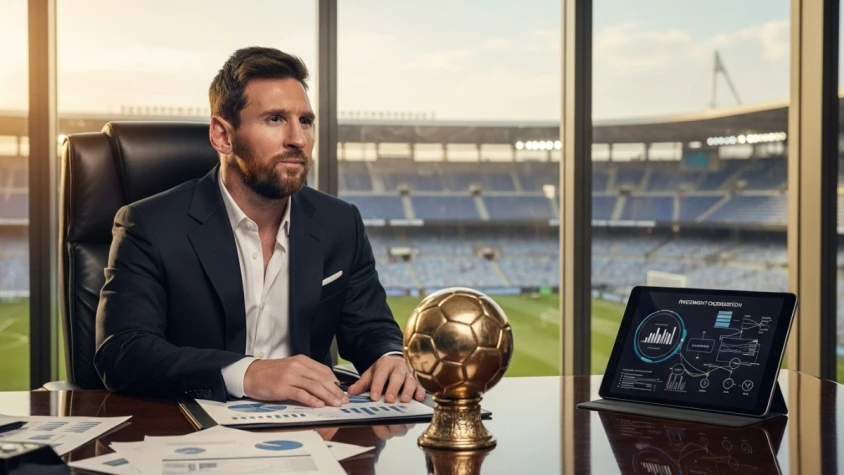
Lionel Messi doesn't want to be a coach.
In an interview with Argentine streaming channel Luzu TV that aired Tuesday, the Inter Miami captain made something clear about his post-playing future: he'd rather build something than pace a touchline.
"I don't see myself as a coach," Messi said. "I like the idea of being a manager, but I'd prefer to be an owner. I'd like to have my own club, start from the bottom, and make it grow. To be able to give the kids the opportunity to develop and achieve something important. If I had to choose, that's what would appeal to me most."
Start from the bottom. Make it grow. The eight-time Ballon d'Or winner sounds less like a retired superstar planning a vanity project and more like someone who actually wants to get his hands dirty.
He's already started
This isn't idle talk. Messi co-owns Deportivo LSM, a fourth-division club in Uruguay that he launched with longtime teammate Luis Suárez back in May. He has a future minority ownership stake in Inter Miami written into his contract. His family founded Leones de Rosario FC in Argentina's fourth tier, based in Santa Fe Province. He even created the Messi Cup—an under-16 youth tournament that brought eight academy teams from around the globe to Miami in December. River Plate won the inaugural edition, beating Atlético Madrid in the final.
The man isn't just talking about development. He's investing in it.
What this means for MLS—and beyond
When Messi arrived in Miami in 2023, skeptics wondered how long he'd stick around. He signed a contract extension in October that keeps him playing through 2028. He led Inter Miami to their first MLS Cup title last month, adding to a career that already includes everything imaginable. His 2025 campaign produced 46 goals and 28 assists across all competitions—43 goals for Miami alone, 29 in MLS from just 28 games.
The league has never seen anything like him. And now he's hinting at staying involved long after his playing days end.
David Beckham took a different path. He negotiated an option to buy into MLS during his LA Galaxy deal, exercised it years after retirement, and built Inter Miami from scratch. Messi seems interested in something smaller, more hands-on—the fourth divisions, the youth academies, the infrastructure that creates players rather than buys them.
"I'd like to have my own club, start from the bottom," he repeated during the interview. "Being able to give kids the opportunity to develop and achieve something important."
The bigger picture
Messi also opened up about his personality during the Luzu TV chat—something he rarely does. He described himself as "weirder than hell" in private, someone who enjoys solitude and struggles to express emotions outwardly. He mentioned therapy during his Barcelona years, admitted he still insults himself mentally after bad performances.
"I have a side to me where I'm weirder than hell. I really enjoy being on my own," he said. "I tend to bottle things up, to keep everything inside."
It's a strange thing, hearing the greatest player of his generation talk about himself like this. But it also explains the ownership interest. Building something from nothing—quietly, methodically, without the spotlight—might suit him better than any pundit role ever could.
First, though, there's the matter of the 2026 World Cup. Argentina returns as defending champions, and Messi will likely lead them one last time on North American soil. After that? The fourth division awaits.