

The commercial circus comes to town
Let's be clear about what happened in Kolkata this weekend: Lionel Messi didn't visit India to connect with fans. He visited to fulfill a promotional contract, pocket his appearance fee, and move on to the next photo opportunity. What followed was entirely predictable—yet another example of modern football's complete disconnection from the people who actually pay for it.
Fresh off winning the MLS Cup with Inter Miami, the Argentine legend touched down in India for a three-day promotional tour. At Kolkata's Salt Lake Stadium on Saturday, tens of thousands of supporters—some traveling from distant cities like Darjeeling—packed in to see their hero. They'd paid premium prices, up to 12,000 rupees (roughly $140), for tickets marketed as a chance to see the eight-time Ballon d'Or winner up close.
What they got was a glorified lap of honor lasting approximately ten minutes before Messi vanished, surrounded by officials, ministers, and photographers. No skills demonstration. No penalty kicks. No meaningful interaction. Just a brief wave and he was gone, whisked away to his next corporate obligation.
— ANI (@ANI) December 13, 2025
When fans become customers, expect customer complaints
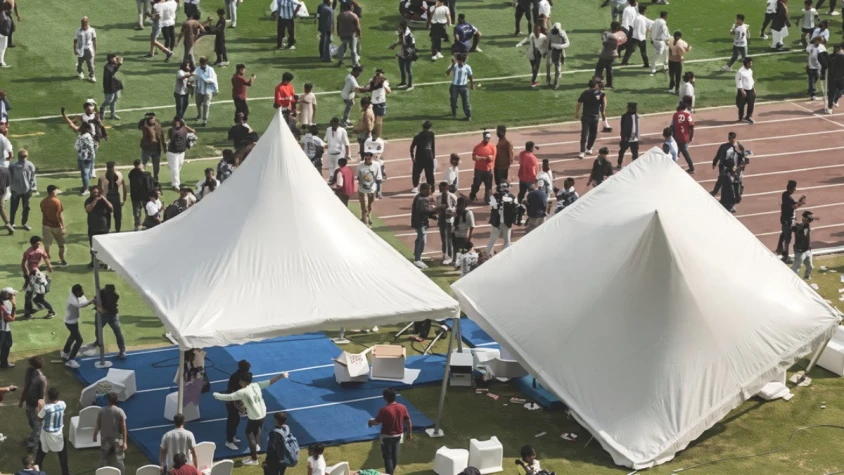
The aftermath was chaos. Bottles rained down onto the athletics track. Hundreds of seats were ripped from their fixtures. Banners bearing Messi's image—ironically purchased by the same fans now destroying them—were torn down. Officials who'd surrounded the player, blocking supporters' views, were met with furious jeers.
According to reports from Khel Now, Messi was briefly trapped inside the stadium as the situation deteriorated. Footage from Asian News International showed his convoy eventually leaving for the airport, while angry supporters vented their frustration to cameras.
"Absolutely terrible event," one fan told ANI. "He came for just 10 minutes. All the leaders and ministers surrounded him. We couldn't see anything. He didn't take a single kick or a single penalty. So much money, emotions, and time wasted."
Another supporter, who'd brought his child specifically to see Messi, called it "a scam." One fan who'd paid 12,000 rupees said bluntly: "We couldn't even glimpse him. Why did they call us then?"
The real scandal isn't the riots—it's the business model
Here's what nobody in football's corporate machinery wants to acknowledge: this disaster was engineered by design, not accident. Someone sold those tickets knowing full well Messi would barely appear. Someone marketed this as a meaningful fan experience knowing it would be nothing of the sort. Someone calculated that squeezing thousands of people into a stadium for a ten-minute celebrity sighting was acceptable business practice.
This is what football has become—a series of transactional encounters where genuine connection is replaced by appearance fees and photo ops. Messi's remaining schedule in India includes virtually inaugurating a 21-meter statue of himself (done remotely "for security reasons," naturally), attending concerts, overseeing youth football clinics he likely won't personally conduct, a padel tournament, and launching charitable initiatives that will make for excellent PR content.
Notice what's missing? Actual football. Actual engagement with the sport that made him wealthy beyond imagination.
The Messi brand versus the Messi experience
There's an uncomfortable truth here that transcends this particular incident: Lionel Messi the player and Lionel Messi the global brand are increasingly separate entities. One was the greatest footballer of his generation. The other is a carefully managed commercial property designed to maximize revenue extraction from markets like India, where football fandom runs deep but meaningful access to top players remains rare.
The fans in Kolkata weren't wrong to feel cheated. They were cheated. They paid genuine money for an advertised experience that wasn't delivered. In any other industry, this would qualify as false advertising. In football, it's called a promotional tour.
What's particularly galling is the security theater—VIPs and officials forming a human wall around Messi, ensuring ordinary supporters who'd actually purchased tickets couldn't see what they'd paid for. It's a perfect metaphor for modern football's class system: the wealthy and connected get access, while regular fans get a distant glimpse if they're lucky.
— The Khel India (@TheKhelIndia) December 13, 2025
When the beautiful game becomes ugly business
The riots in Kolkata are embarrassing, certainly. Vandalism isn't justified, and those seats will need replacing. But spare a thought for the underlying cause: people who scrimp and save to see their heroes, only to discover they've been sold a fantasy that bears no resemblance to reality.
This isn't about Messi personally—though he presumably signs off on how his brand is monetized. This is about an industry that treats supporters as revenue streams rather than human beings. An industry where a player can collect an appearance fee for literally appearing, with no obligation to actually engage.
Indian football fans deserve better than this. They deserve transparency about what they're actually buying. If it's a ten-minute cameo appearance surrounded by dignitaries, say so upfront. Price it accordingly. Don't market it as an unmissable experience and then deliver a glorified photo opportunity.
The real tragedy isn't the damaged seats at Salt Lake Stadium. It's that scenes like this will repeat themselves in the next market, at the next promotional event, with the next batch of fans who believe they're buying access to their heroes. Modern football has perfected the art of monetizing disappointment, and Kolkata was just the latest example of paying customers discovering that hard truth.
