

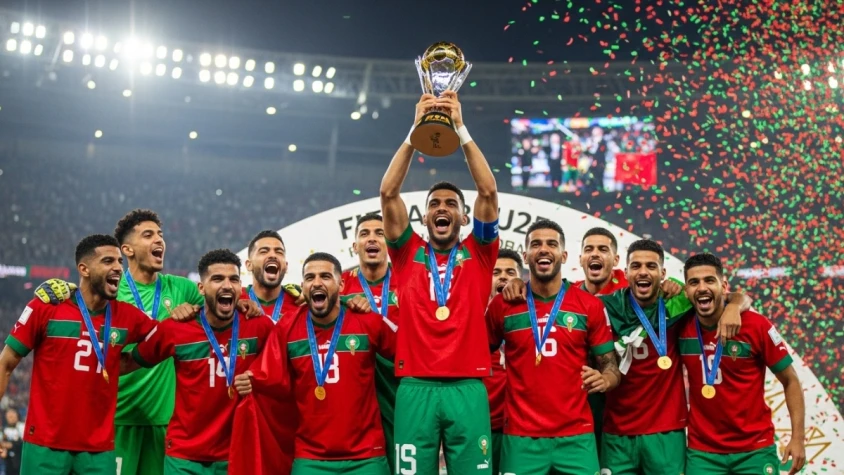
Morocco just won the 2025 FIFA Arab Cup in extra time against Jordan, and if you're surprised, you haven't been paying attention. The Atlas Lions are legitimately one of the best national teams on the planet right now, and this tournament was never going to end any other way.
But let's talk about what actually happened in Lusail, because the narrative around this final is already being sanitized into a feel-good underdog story. It wasn't. It was Morocco being Morocco—dominant, technically superior, and briefly complacent—then waking up just in time to remind everyone why they made the World Cup semi-finals.
The goal everyone will talk about (and should)
Oussama Tannane scored one of those goals that makes you rewind three times. Ball recovered near midfield, goalkeeper slightly off his line, and Tannane decides that's enough information to attempt something ridiculous. The audacity. The technique. The pure "why not?" energy that separates genuinely talented players from the careful ones who never try anything interesting.
This is what Morocco does now. They have players confident enough to attempt the spectacular because they know their system will cover for them if it doesn't work. That's not arrogance—that's what happens when a national team actually has an identity and sticks with it.
Then Morocco got comfortable. Big mistake.
Here's where the honest analysis comes in, the part most outlets will skip because it doesn't fit the "Morocco overcame adversity" storyline: they nearly threw this game away through pure complacency.
After Tannane's goal, Morocco controlled the match. Possession dominance, creating chances, looking every bit the superior side. And then they stopped. Not physically—tactically. The pressing intensity dropped. The defensive line got lazy. The midfield stopped covering passing lanes.
Ali Olwan is a good striker. The tournament's top scorer deserves credit. But his two goals weren't the result of Jordanian tactical genius—they were gifts from a Moroccan defense that decided the game was over before it actually was.
Jordan's moment was real, but let's not overstate it
The Nashama will face Argentina at the 2026 World Cup, and reaching this final is a genuine achievement. Jordan has improved significantly, and Olwan is a legitimate threat at international level. That's all true.
But the "Jordan almost pulled off the upset of the century" narrative needs context. Morocco gave them those goals. A focused, disciplined Atlas Lions side doesn't concede twice to Jordan in a final. This wasn't Jordan breaking down a well-organized defense—this was Morocco's concentration lapse being punished by the one player capable of punishing it.
There's a difference between "Jordan played incredibly well" and "Morocco played incredibly poorly for 15 minutes." Both things happened, but only one is being reported.
Extra time showed the real gap
Once Morocco actually woke up, the outcome was never in doubt. The extra time period was a tactical mismatch—fresh Moroccan legs against a Jordanian side that had emptied the tank to get back into the game.
This is the part that matters for World Cup observers: Morocco has depth. They can absorb setbacks, adjust, and still dominate the final 30 minutes against a team that just scored twice on them. That's elite mentality. That's what separates good international teams from genuine contenders.
Jordan, for all their heart, ran out of answers. Their defensive shape collapsed, their counters lost penetration, and Morocco's technical superiority became overwhelming. The winning goal felt inevitable long before it actually arrived.
What this actually tells us
Morocco is building something sustainable. The 2022 World Cup run wasn't a fluke—it was the foundation. This Arab Cup win, achieved through adversity they largely created themselves, shows a team that knows how to win even when they're not at their best.
That's the scariest thing about elite teams: they don't need to be perfect. Morocco was sloppy, complacent, and nearly embarrassed themselves on a continental stage. They still won. Comfortably, in the end.
Jordan goes home with lessons and respect, which is genuinely valuable heading into a World Cup cycle. But let's not pretend this final revealed some new truth about parity in Arab football. Morocco is operating on a different level, and the gap between them and the rest isn't closing—it's just occasionally obscured by 15 minutes of defensive negligence.
The Atlas Lions won because they're better. That's not exciting analysis, but it's accurate. Sometimes the favorite wins, and the only story is how easily they could have made it look if they'd bothered to concentrate for the full 90 minutes.