

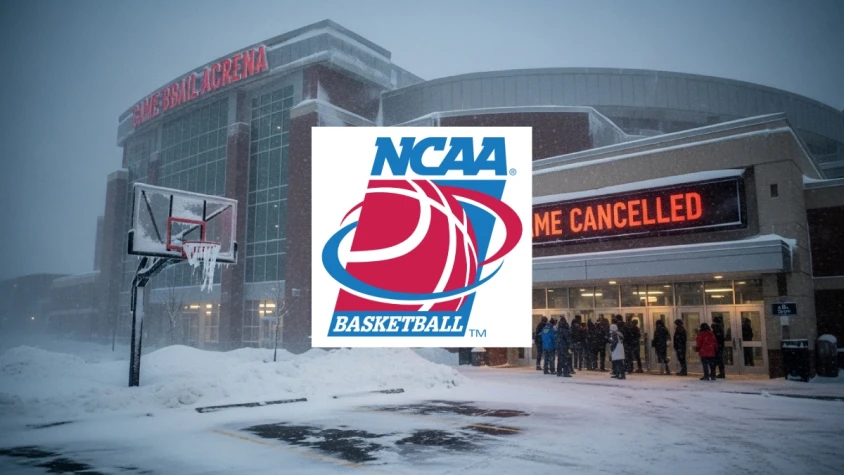
Look, I've seen weather mess with sports before. But Winter Storm Fern? This thing is different. We're talking about a weather system that meteorologists are comparing to a major hurricane in terms of damage potential. Snow, ice, and freezing temperatures stretching from New Mexico to New England. Over 200 million people in its path.
And college basketball is right in the middle of it.
The dominoes started falling early
By Tuesday, athletic directors across the country were already on the phone with conference officials. The Sun Belt Conference didn't wait around—they started reshuffling their women's basketball schedule before most people even knew what was coming. Smart move. The American Athletic Conference followed suit, pushing games up to Friday.
But here's where it gets interesting. North Carolina Central didn't just move games around—they straight up postponed four games. Two men's, two women's. Thursday through Monday, all gone. Durham, North Carolina is apparently going to be a mess, and the school isn't taking any chances.
Gerald Harrison, Marshall's Vice President and Director of Athletics, put it bluntly: "Obviously, this winter storm is a very serious situation and some of these circumstances are outside of our control." He added that the Sun Belt worked with member schools to keep competition going while "mitigating travel issues for all parties."
Translation: we're doing the best we can with a bad hand.
The big names are affected too
Don't think this is just a mid-major problem. The No. 1 UConn women's basketball team had their game at Seton Hall moved from Sunday to Saturday at noon. The Huskies are undefeated and rolling through the Big East, but even they can't outrun a foot of snow expected in the Northeast.
Here's what's wild: UConn already beat Seton Hall 84-48 earlier this season. So logistically, this is just a scheduling headache. But imagine if this was a conference title showdown. Imagine if rankings or tournament seeding were on the line. The system isn't built for this kind of disruption.
The games you need to track
If you're trying to figure out what's actually happening this weekend, here's the rundown:
- Postponed entirely: Delaware State at NC Central, Maryland-Eastern Shore at NC Central
- Moved to earlier tipoff: Louisiana at Appalachian State (now noon ET), FGCU at Austin Peay (now noon ET), Stetson at Lipscomb (now noon ET)
- Rescheduled to different days: UL Monroe at Appalachian State (from 1/24 to 1/23), Tulane at Charlotte (from 1/25 to 1/23 at 7:30 PM), Wake Forest game moved up
- Big East adjustment: No. 1 UConn at Seton Hall (moved from Sunday to Saturday)
Rice also adjusted both their men's and women's games. The men's home game against Tulsa went from Sunday 3 PM to Saturday 3:30 PM. The women's game against Tulane got pushed up an hour.
This isn't just about basketball
The Texas Rangers cancelled their annual Fan Fest scheduled for Saturday. Governor Brian Kemp declared a State of Emergency for all of Georgia, effective Thursday at 11 AM and running through January 29th. That's not a weekend—that's a full week.
The National Weather Service is warning about "treacherous travel conditions, prolonged power outages, and tree damage." When federal agencies start using words like that, you know it's serious.
What this really exposes
Here's my take, and I don't think it's controversial: college sports infrastructure is wildly unprepared for weather disruptions. We build schedules assuming everything goes according to plan. We assume buses can travel, arenas can open, and fans can safely get home.
When that assumption breaks down, we get chaos. Games at noon on a Thursday. Athletic directors making statements that sound more like apologies than plans.
Harrison said Marshall fans should still come out and give the team "the greatest home-court advantage in the Sun Belt." I respect the optimism. But let's be real—when the forecast calls for ice and the governor is telling people to stay home, attendance is going to suffer.
The bigger question is what happens next. Does the NCAA build more flexibility into conference schedules? Do schools invest in better contingency planning? Or do we just keep reacting to weather events like they're unexpected, when anyone who's lived through an American winter knows they're not?
Winter Storm Fern won't last forever. But the problems it's exposing? Those aren't going anywhere.