

This is bigger than you might think
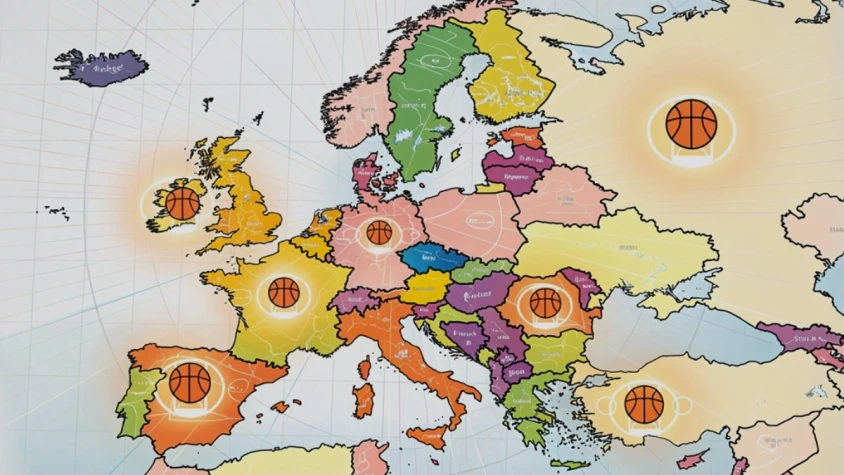
The NBA and FIBA announced they're moving forward together on a new pan-European professional basketball league. They're starting in January by talking to prospective teams and ownership groups. That sounds like a standard press release. It's not. This is a fundamental reorganization of how professional basketball operates on an entire continent.
Let's be cear about what this means: the NBA, an American league, is now directly involved in structuring professional basketball competition in Europe. That doesn't happen accidentally. That doesn't happen without serious money and serious intent.
The structure is actually clever
The league would offer permanent spots for the biggest franchises, but here's where it gets interesting: every team in FIBA-affiliated domestic leagues gets a merit-based pathway. They can qualify through the Basketball Champions League or an end-of-season tournament. This isn't a closed competition for a select few. It's a structure that theoretically allows smaller leagues and smaller clubs to compete for spots.
This matters because it prevents the kind of resentment that killed previous attempts at pan-European competition. You're not locking out Spanish teams or Italian teams or French teams. You're saying every league has a shot if they're good enough. That's democratically designed in a way that works financially and competitively.
The scheduling genius
They're aligning everything with domestic league schedules and international team windows. That's the detail that makes this actually workable. Players can play their club basketball, then play for their national team, then come back. There's no conflict. That's not bureaucratic accident—that's thinking through how professional basketball actually functions.
Previous attempts at pan-European basketball failed partly because scheduling was a nightmare. Clubs and countries were constantly at war over player availability. This solves that by saying everything runs simultaneously and cooperatively.
What this means for existing structure
The Basketball Champions League still exists. Domestic leagues still exist. But now there's this new tier that's supposed to be premium competition featuring the best teams from across Europe competing together. Whether that works depends entirely on execution and whether the NBA actually backs it financially. If they commit resources and investment to development at all levels—academies, coaching, officiating—this becomes viable. If it's just another league with no infrastructure support, it collapses.
The press release specifically says the NBA and FIBA will dedicate financial support to European basketball's ecosystem. That's the keyword. If that actually happens, if they're genuinely funding domestic leagues and academies and development, then this isn't exploitation. It's investment. If it's just talk, it's a threat to existing leagues.
Why now?
The NBA has been looking at Europe for years. European players are increasingly prominent in the NBA. Euros are generating massive viewership. There's money in professional basketball in Europe if you organize it correctly. This league would theoretically create a higher-level competition that sits above national leagues but below the NBA. It's a professional pathway.
For young European players, this could be perfect. You don't have to go to America immediately. You can develop at a competitive level in Europe, get seen by NBA scouts, and make the jump when you're ready. For the NBA, it's a development pipeline. For FIBA, it's streamlining competition. Everyone wins if it's executed properly.
The real test is execution
Plans are easy. Execution is where everything falls apart. Getting teams to commit. Getting cities interested. Managing the balance between the new league, existing domestic leagues, and international competition. This requires coordination across countries with different basketball cultures and different economic realities. That's genuinely hard.
But the structure they're proposing suggests they've thought about the actual obstacles. Merit-based qualification stops resentment. Financial support prevents domestic leagues from being decimated. Schedule alignment prevents chaos. If the follow-through matches the announcement, this could actually work. If it doesn't, it's just another failed attempt at reorganizing European basketball.