

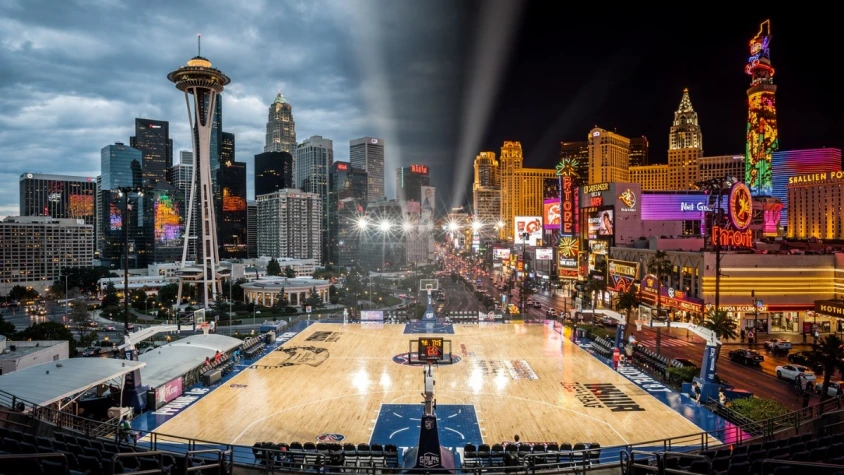
Silver just confirmed what everyone already knew
Adam Silver held a press conference before the NBA Cup final and addressed league expansion, confirming that a decision on adding two franchises will come in 2026. According to The Athletic, Seattle and Las Vegas are the primary targets to bring the league from 30 to 32 teams. Seattle lost the SuperSonics in 2008 when they relocated to Oklahoma City, while Las Vegas remains one of America's major cities without an NBA franchise despite hosting the WNBA's Aces.
None of this is news. Seattle and Vegas have been the obvious choices for years. What Silver actually confirmed is the timeline—2026 for a formal decision—and that the league will add two teams simultaneously to maintain conference balance. But let's be clear about what this is really about: money. Expansion fees for two NBA franchises will generate somewhere around $10 billion that gets split among the 30 existing owners. That's the driving force, not some noble mission to grow basketball.
The TV revenue split is where this gets messy
Here's the uncomfortable reality Silver danced around: current TV revenue is divided 30 ways. Adding two franchises means splitting it 32 ways, which reduces every existing team's share. The Athletic notes this will be a major debate point among owners. Some franchises barely turn a profit now—adding two more teams dilutes the pie further unless the overall TV deal grows enough to compensate.
Silver's betting that expansion into Seattle and Vegas adds enough value to the league's broadcast package that the total revenue increases even as it's divided more ways. That's a gamble. Seattle's a strong basketball market with history, but Vegas is unproven at the NBA level. The Aces draw well in WNBA, but that's a different product with different economics. If Vegas doesn't deliver the ratings and revenue the league expects, every owner takes a financial hit.
Silver's relocation comments were damage control
Silver addressed rumors about potential franchise relocations, specifically Memphis and New Orleans, saying relocations aren't a priority. He explained that league rules require evaluating factors like community support and local engagement, not just market size. According to The Athletic, Silver said: "It's not because certain markets don't generate as much revenue as others that they don't deserve an NBA franchise. If we were to relocate a team, I don't think ranking teams 1 to 30 by market size and moving the bottom two to more prosperous locations would be a good method."
That's corporate speak for "we're not moving Memphis or New Orleans right now." But notice he didn't rule it out entirely. He's managing expectations while leaving the door open if those markets continue struggling financially. The Pelicans have attendance issues. The Grizzlies are solid but play in a smaller media market. If either franchise's financials deteriorate badly enough, Silver's comments won't stop relocation conversations.
Why Seattle makes sense and Vegas doesn't
Seattle is a no-brainer. They had the SuperSonics for 41 years before Clay Bennett stole them and moved them to Oklahoma City. The city still has the arena infrastructure, a passionate fanbase that never moved on, and a wealthy tech economy that can support luxury boxes and sponsorships. Bringing the NBA back to Seattle corrects a historical injustice and taps into an existing market that's been begging for basketball for 17 years.
Las Vegas is a different story. It's a transplant city with no basketball history at the NBA level. The Raiders moved there, the Golden Knights succeeded in hockey, but those are different sports with different demographics. NBA games happen 41 times a year at home. Can Vegas support that when a huge percentage of the population works in hospitality and tourism? When the economy is tied to gambling revenue that fluctuates? The WNBA Aces work because it's 20 home games, not 41, and the ticket prices are lower. Scaling that up to NBA economics is unproven.
What expansion actually means for the league
Adding two teams dilutes talent across 32 rosters instead of 30. That means more games where depth players are starting, more blowouts, and lower overall quality. The NBA already has teams tanking because they can't compete—adding two more franchises makes that problem worse. You're also creating two expansion drafts where existing teams lose players, disrupting rosters that are already built.
The competitive balance argument is weak too. Adding Seattle and Vegas doesn't fix the East-West talent imbalance. It just adds two more teams that will probably struggle for years before becoming competitive. Look at expansion history: the Raptors and Grizzlies in 1995 took years to matter. The Bobcats (now Hornets) in 2004 were awful for a decade. Expansion teams are bad by design because they're built from castoffs in the expansion draft.
The bottom line
Adam Silver's 2026 timeline for expansion to 32 teams is happening because owners want the $10 billion in expansion fees. Seattle deserves a team and will support it immediately. Las Vegas is a gamble that might work but hasn't proven it can sustain an 82-game NBA season. The TV revenue split will cause fights among owners who don't want smaller checks. And the overall product gets worse because talent spreads thinner. This isn't about growing basketball—it's about enriching billionaires. Silver can dress it up however he wants, but expansion is a cash grab disguised as league development.