

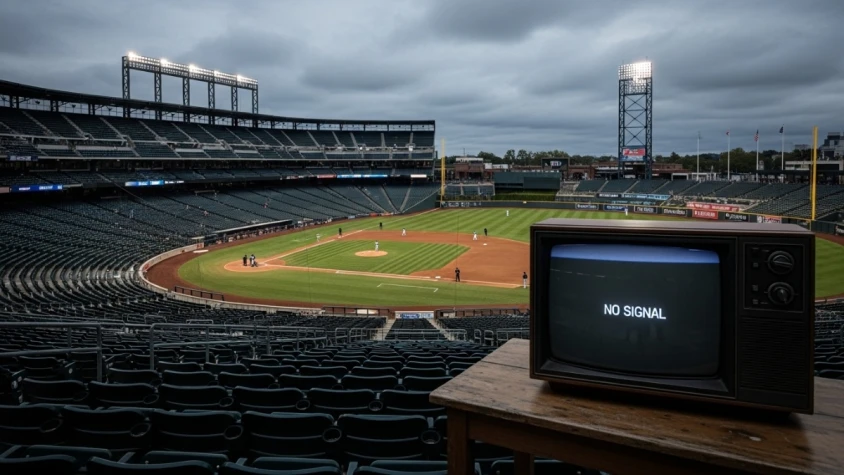
Nine Major League Baseball teams woke up this week without a television home. Not because they wanted it that way. Because their broadcast partner couldn't pay them.
The Atlanta Braves. The Detroit Tigers. The St. Louis Cardinals. The Cincinnati Reds. The Kansas City Royals. The Los Angeles Angels. The Miami Marlins. The Milwaukee Brewers. The Tampa Bay Rays.
All nine terminated their contracts with FanDuel Sports Network's parent company, Main Street Sports Group, after missed payments that began piling up in December. The Cardinals didn't receive what they were owed. Neither did the Marlins. Others reportedly saw the writing on the wall and decided to act before bankruptcy proceedings trapped them in legal limbo.
It's the kind of mess that sounds like it shouldn't happen in 2026. The regional sports network model—that lucrative pipeline of local television rights that once made mid-market teams competitive—has been collapsing in slow motion for years. Now it's officially in free fall.
What actually happened
Main Street Sports Group emerged from Chapter 11 bankruptcy less than a year ago, rebranded from the old Diamond Sports Group and Bally Sports Network that had been hemorrhaging money since the pandemic. The company lost an estimated $200 million in 2025 across 29 MLB, NBA, and NHL teams it broadcasts.
That's not a typo. Two hundred million dollars gone.
Main Street has been in talks with DAZN about a possible acquisition, but according to Sports Business Journal, those discussions have "all but extinguished." Fubo remains a potential buyer, though nothing is imminent. The company may have to shut down entirely in 2026 if no rescue materializes.
"No matter what happens, whether it's Main Street, a third party or MLB Media, fans are going to have the games," Commissioner Rob Manfred said at a press conference Thursday. He's right about that, technically. MLB has already taken over broadcasts for the Diamondbacks, Padres, Rockies, Guardians, Twins, and Mariners. The league is prepared to do the same for any or all of the nine teams that just walked away.
But "prepared" doesn't mean "eager."
The money problem nobody talks about
Here's what matters for fans watching at home: you'll see your team play. The production quality will probably be fine. MLB has been building internal broadcast infrastructure for years.
What you won't see is the revenue those teams used to receive. The Brewers got $35 million annually from FanDuel Sports Network. That money is gone for 2026—possibly replaced by something, possibly not. The Tigers' rights fee was reportedly worth over $50 million a year at its peak less than a decade ago. It's been declining since.
MLB discontinued a program that helped subsidize affected teams after the 2024 season. These franchises are on their own now.
"The clubs have control over the timing," Manfred said. "They can make a decision to move to MLB Media because of the contractual status now. I think what's happening right now—clubs are evaluating their alternatives."
Translation: figure it out yourselves.
Why this keeps happening
Cord-cutting killed regional sports networks slowly, then all at once. Cable bundles used to subsidize RSNs even when viewers didn't watch sports. ESPN charged everyone; Bally Sports charged everyone. The math worked as long as enough people kept paying for cable.
Then streaming happened. Then the pandemic accelerated everything. Then people realized they could survive without cable, and suddenly the entire model collapsed under its own weight.
What comes next is probably a league-controlled streaming system with direct-to-consumer options. The Diamondbacks offered a $99.99 season pass last year through DBACKS.TV that included most games without traditional blackout restrictions. That's likely the template.
It's more accessible than cable ever was. It's also significantly less lucrative for teams—at least in the short term.
The bigger picture
MLB isn't the only league dealing with this. Main Street Sports Group also broadcasts games for 13 NBA teams and seven NHL franchises. Those relationships are equally precarious. The Pistons, Red Wings, and Tigers all rely on the same network that just lost nine baseball clients overnight.
Some teams will emerge from this transition stronger. Direct-to-fan streaming builds audience data and removes middlemen. Others will feel the pinch of reduced rights fees while their competitors in bigger markets keep cashing national television checks.
The sport's financial inequality has been growing for years. This accelerates it.
For now, fans should expect answers by spring training. MLB's 2028 media rights restructuring looms in the background, and this situation may force the league to move faster than planned.
As always in baseball, follow the money. The rest will sort itself out—eventually.