

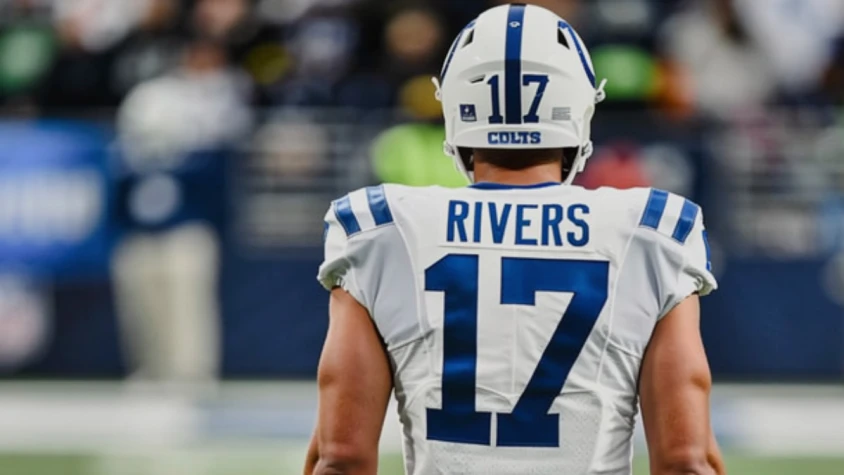
The comeback nobody needed but everyone wanted to watch
It takes courage, stupidity, or some unholy combination of both to return to the NFL at 44 years old. Philip Rivers chose that path over the Hall of Fame induction that was waiting for him with open arms. And for about 58 minutes against Seattle, the fairy tale almost worked.
Then reality intervened, as it always does, with an interception that landed in Seattle defenders' arms with 18 seconds remaining. Final score: Seahawks 18, Colts 16. Rivers' line: 18-of-27, 120 yards, one touchdown, one interception. The stats of a game manager who couldn't quite manage the moment that mattered most.
This is what happens when nostalgia collides with the unforgiving physics of professional football. Rivers isn't built like a Greek god—he never was. He's built like your neighbor who plays backyard football with his kids after Thanksgiving dinner and seems unstoppable against nine-year-olds. That everyman quality made his return charming. It also made it doomed.
The moment that revealed everything
There's reportedly footage of Rivers' lone touchdown pass being shown to schoolchildren, their faces lighting up as the old quarterback found his receiver. Beautiful moment. Inspiring story. Perfect for the highlight packages and human interest segments that the NFL loves to produce.
But football games aren't decided by inspirational moments shown to children. They're decided by what happens when the clock hits 18 seconds, you're down three points, and the defense knows you have to throw. That's when 44-year-old arms meet 24-year-old cornerbacks, and the outcome is as predictable as sunrise.
Rivers faced this scenario countless times during his career. The pressure should have been nothing to him. Experience was supposed to compensate for what age had stolen. Except experience doesn't make your arm stronger. It doesn't make tight windows any wider. And it certainly doesn't overcome the simple fact that professional athletes are built on the foundation of physical gifts that erode with every passing year.
The final throw—too long, too imprecise, intercepted—wasn't a mistake born from panic. It was a 44-year-old body being asked to do something it could have done at 34, maybe even 38. But not anymore. Not when it matters.
— NFL (@NFL) December 15, 2025
When the game plan admits what nobody wants to say
Indianapolis' approach told you everything about what they actually believed about Rivers' capabilities. Jonathan Taylor carried 25 times for 87 yards. The game plan was deliberately restricted, built around the running back rather than the quarterback who was supposed to be saving their season.
When Rivers did have to push the ball into tight windows, he didn't back down. Credit where it's due—the man showed up with the same gunslinger mentality that defined his career, complete with the sign of the cross before taking the field. His faith remains unshaken. His arm, however, has made peace with gravity.
He delivered the "strict minimum," which in a defensive slugfest actually kept Indianapolis competitive. Against Sam Darnold and the Seahawks, that was almost enough. Almost. But the NFL doesn't award points for almost, and it doesn't care about your story when the game is on the line.
The defensive battle that actually mattered
While Rivers provided the narrative hook, the real game happened in the trenches and in coverage. Lou Anarumo's Colts defense and Mike Macdonald's Seahawks unit delivered performances that deserve more attention than they'll receive.
Seattle's defense, a well-oiled machine, struggled initially but then locked down. Their linebackers and cornerbacks did enormous work against both the run and in coverage, limiting Indianapolis to just 118 passing yards. That's suffocation-level defense in an era designed to favor offense.
Indianapolis matched that intensity with aggressive pressure that made Darnold uncomfortable all game. The Colts hit him hard and often—the kind of physical shots that mark bodies and minds. Despite Jaxon Smith-Njigba's seven catches for 113 yards, Indianapolis held Seattle without a single touchdown and forced a brutal 2-for-13 conversion rate on third down.
In a properly functioning league where narrative didn't override substance, we'd be talking about those defensive performances as the story. Instead, we're discussing a 44-year-old quarterback's predictable limitations because that's what sells.
— Paul Robertson 🇺🇸 (@ShadeSalvo) December 14, 2025
The kicker duel that decided everything
Hyper-defensive games inevitably come down to field goals, and this one followed the script perfectly. Blake Grupe and Jason Myers traded long-distance kicks like artillery fire in the fourth quarter.
Myers gave Seattle a 15-13 lead with two minutes remaining. Grupe answered from 60 yards out—16-15 Indianapolis. Darnold drove Seattle into range, Myers converted from 56 yards—18-16 Seahawks with 18 seconds left.
Eighteen seconds. Three timeouts. Everything Rivers' experience was supposed to overcome. This is where legends are made, where the comeback story reaches its climax, where the old gunslinger silences doubters one final time.
Except that's Hollywood, not football. The interception that ended it wasn't dramatic—it was inevitable. A 44-year-old arm attempting something it couldn't quite execute, defended by players young enough to be his children, in a league that has never cared about your feelings.
The icon nobody asked for but everyone will remember
Rivers will be remembered for this game, which is somehow both accurate and completely wrong. He'll be the icon for fathers of large families, the guy who proved you could compete even when your best years are decades behind you. The highlight of his touchdown pass, shown to cheering schoolchildren, will live forever in feel-good montages.
But let's be honest about what actually happened: A team desperate for quarterback stability convinced themselves that a 44-year-old retiree could solve their problems. They restricted their offense to compensate for his limitations. They leaned on their running game and defense. And when crunch time arrived, they discovered that nostalgia and courage can't overcome simple physics.
Seattle improves to 11-3, maintaining their lead in the NFC West. Indianapolis falls to 8-6, their playoff hopes damaged but not destroyed. Philip Rivers, meanwhile, is left as a too-old station master watching trains depart without him.
Why this matters beyond one game
The Rivers comeback attempt represents everything misguided about how modern sports discusses aging athletes. We love the stories of Tom Brady playing until 45, of athletes defying Father Time, of veterans proving doubters wrong. These narratives are compelling precisely because they're rare—exceptions that prove the rule rather than challenging it.
The rule is simple: Professional sports demand physical capabilities that decline with age. No amount of experience, preparation, or inspirational music can change biology. Rivers at 44 could still process defenses faster than most quarterbacks half his age. He understood coverages, recognized blitzes, and knew exactly what throw the situation demanded.
His body just couldn't execute what his mind commanded. That's not a failure of will or preparation—it's reality asserting itself against our preference for fairy tales.
The real question isn't whether Rivers should have stayed retired—clearly he should have. The question is why Indianapolis convinced themselves this was a solution rather than a desperation move dressed up as inspiration. When your quarterback plan involves accommodating a 44-year-old's limitations rather than building around his strengths, you don't actually have a quarterback plan.
Rivers gave it his best effort. He showed up, signed the cross, and competed. In the end, though, competing isn't winning. And 18 seconds was just enough time for everyone to remember why he retired in the first place.
The schoolchildren who watched his touchdown will remember the joy. The rest of us will remember the interception. That's not cynicism—it's just what happens when nostalgia meets the NFL's unforgiving reality.