

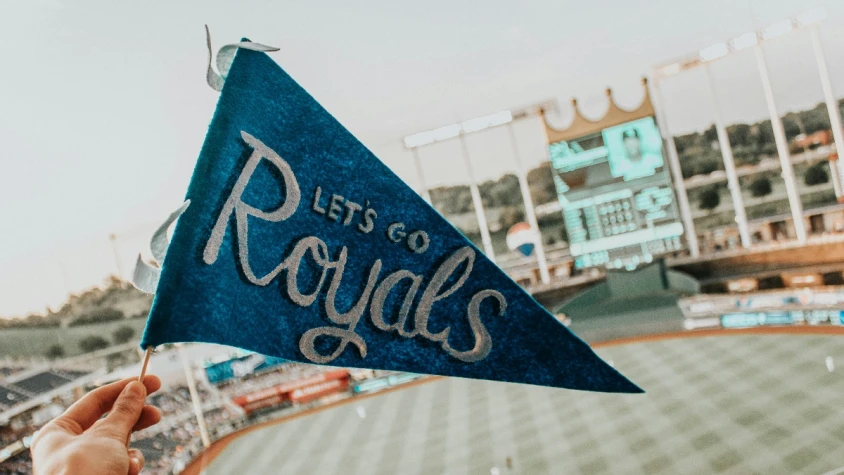
The Kansas City Chiefs officially announced their departure for a new $3 billion domed stadium in Kansas two weeks ago. Now the Royals are alone at Kauffman Stadium, and they're running out of options.
On Monday, Kansas House Speaker Dan Hawkins confirmed what many feared: the state isn't extending its offer to the baseball team. The Royals let the December 31 deadline pass without accepting the STAR bonds deal that would have covered 70% of a new stadium's construction costs.
"We put an end to it on December 31st," Hawkins said at a press event in Topeka.
Translation: Kansas is done chasing. The Royals are on their own.
How Kansas City's stadium crisis unfolded
The Chiefs and Royals have shared the Truman Sports Complex since 1973. Their leases expire in January 2031, and both franchises have known for years that something had to change.
In April 2024, Jackson County voters rejected a sales tax extension that would have funded an $800 million Arrowhead renovation and a $2 billion downtown ballpark for the Royals. The margin wasn't close — 58% voted no.
That defeat set off a scramble. Kansas lawmakers passed legislation that summer authorizing STAR bonds for up to 70% of stadium projects, specifically designed to lure both teams across state lines. The Chiefs took the deal. The Royals didn't.
Now Kansas has a football team, a commitment from the Hunt family to stay for 30 years, and zero interest in continuing negotiations with baseball.
What options does Kansas City actually have?
Owner John Sherman has consistently said his preference is a downtown Kansas City ballpark. The vision: a walkable stadium district near the Power & Light entertainment area, surrounded by restaurants, bars, and residential development. The kind of urban experience that cities like San Diego achieved with Petco Park.
The problem is that every downtown site has faced opposition. Traffic concerns, neighborhood pushback, financing disputes — the Royals have been stuck in negotiation limbo for three years while the Chiefs quietly closed their Kansas deal.
Other possibilities remain on the table:
- Clay County, Missouri: North Kansas City has been floated as an alternative, with renderings showing a stadium along the Missouri River.
- Overland Park, Kansas: The Aspiria Campus in Johnson County is gaining momentum. A Royals affiliate already holds the mortgage on the land.
- Missouri state financing: Governor-elect Mike Kehoe's administration could still offer bonds covering up to 50% of a new stadium — less generous than Kansas, but potentially viable if the Royals commit to Missouri.
The uncomfortable truth? Each option has significant drawbacks, and the Royals have already burned their best one.
Why the Royals hesitated
There's a reason John Sherman didn't follow Clark Hunt to Kansas. Baseball stadiums don't generate the same return on investment as football venues. An NFL team plays eight home games a year, each one a massive economic event. An MLB team plays 81, spreading the revenue across a much longer calendar.
STAR bonds — which use future sales tax revenue to finance construction — work better for concentrated, high-impact developments. A 60,000-seat football stadium with 10 massive game days is an easier sell than a 35,000-seat ballpark hosting Tuesday night games against the Tigers in April.
The math was always trickier for baseball. Sherman knew it. Kansas knew it. And when the deadline hit, nobody blinked.
What happens to Kauffman Stadium?
Kauffman opened in 1973, the same year as Arrowhead. It's been renovated multiple times, most recently in 2009. But it's still a 50-year-old facility without the modern amenities that generate the premium revenue franchises need to compete.
The Royals can stay there through the 2030 season. After that, their options depend entirely on whether they can finalize a new stadium deal in the next five years.
Kansas City Mayor Quinton Lucas released a statement promising that "our unified, hardworking, and exceptional team will continue our strong efforts" to retain the Royals in a downtown facility. But words are cheap, and the clock is ticking.
The bigger picture
This isn't just a Kansas City story. It's a story about how American cities fund professional sports stadiums, who benefits, and who gets left behind.
The Chiefs leveraged one state against another and walked away with a billion-dollar subsidy. The Royals tried to do the same and came up empty. Now they're facing the prospect of playing in an aging stadium while their football neighbors build a palace across the state line.
If the Royals eventually leave Kansas City — whether for Kansas, Las Vegas, or somewhere else entirely — remember this moment. The moment when the state of Kansas said no, and Missouri still couldn't get it done.
John Sherman has a franchise worth over $1.3 billion. He's not going broke. But whether his team will still call Kansas City home in 2031 is genuinely uncertain.
And that's the saddest part. A city that once hosted back-to-back World Series teams now can't figure out where its baseball team should play.