

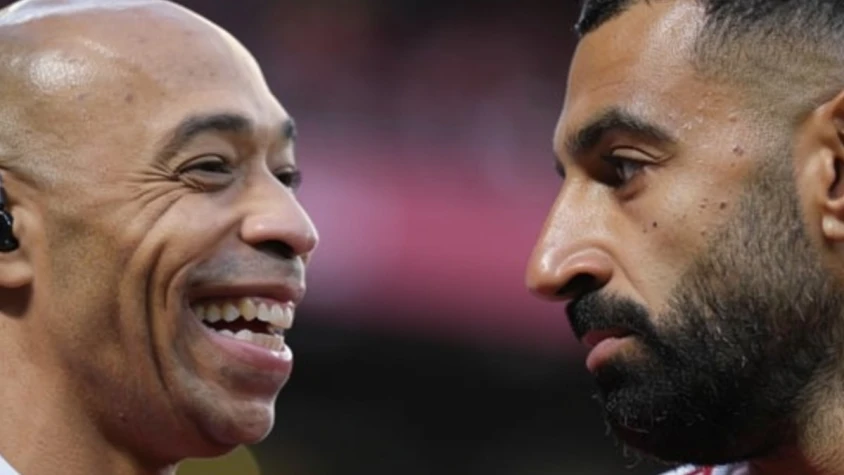
When a legend calls out another legend's nonsense
Mohamed Salah sat on the bench for Liverpool's 3-3 draw with Leeds United and decided the appropriate response was a public meltdown. He told the media he's 'very, very disappointed,' feels the club 'threw him under the bus,' received broken promises over the summer, and believes 'someone doesn't want me at the club anymore.' Classic modern footballer behavior—immediately run to the press when things don't go your way, air internal grievances publicly, and frame yourself as the victim regardless of context. Thierry Henry, working as a CBS pundit, absolutely destroyed this approach and delivered the only honest take on modern football's ego problem that anyone's willing to say out loud.
Henry's response was perfect: 'I had problems with Wenger, with Guardiola... Have you ever heard me talk about it publicly? Never. When you play for a club, you must protect your club at all costs. Whatever happens internally, you protect the club. You protect your teammates, the staff, your manager... You can be angry, frustrated, disagree... But you don't air your dirty laundry in public. Especially when the team is struggling. You wait, you handle it internally, and then if you want to leave or say what's on your mind, you do it at the right time.'
That's not just good advice—that's the fundamental professionalism that's disappeared from modern football. Salah scored 38 goals last season and got benched, which is frustrating. But Henry's point stands: there's a time and place for addressing grievances, and immediately after a match while your team is struggling isn't it. The ego and personal frustration don't supersede the team's interests. Except in 2025, apparently they do, and nobody calls it out except legends like Henry who remember when players actually protected their clubs rather than using them as leverage in public negotiations.
Salah's victim mentality ignores inconvenient context
Let's examine Salah's complaints individually because they're instructive about how modern players frame situations to maximize their victimhood. 'I've done so much for this club over the years, especially last season'—yes, and you were paid enormous wages to do exactly that. Your contributions were compensated. The club doesn't owe you perpetual starting positions because you performed well previously. That's employment, not charity. You deliver performance, you receive payment. When performance declines or tactical situations change, playing time adjusts accordingly.
'The club threw me under the bus'—how, exactly? By making a coaching decision about squad rotation and tactical setup? By not explaining every decision to your satisfaction? This language is deliberately inflammatory, framing normal managerial choices as personal betrayal. Unless Liverpool publicly blamed Salah for results or leaked damaging information about him, they didn't throw anyone under anything. They benched a player for tactical reasons. That's management, not persecution.
'I received many promises this summer and so far I've been on the bench for three matches, so I can't say the promises are kept'—what promises? Playing time guarantees regardless of form or tactical fit? Promises made in summer can't account for how seasons actually develop. Maybe the tactical approach evolved. Maybe other players emerged. Maybe Salah's training didn't meet expectations. Context matters, and Salah provides none because it would undermine his victim narrative.
— CBS Sports Golazo ⚽️ (@CBSSportsGolazo) December 9, 2025
The relationship breakdown Salah can't explain
Salah's most revealing complaint: 'I often said I had a good relationship with the coach, and suddenly there's no relationship anymore. I don't know why, but I feel like someone doesn't want me at the club.' This is manipulative framing designed to generate sympathy while avoiding any self-reflection about why a relationship might deteriorate. Relationships don't collapse randomly. Either something specific happened that Salah won't mention because it reflects poorly on him, or he's exaggerating the severity to pressure the club publicly.
Notice the passive construction: 'there's no relationship anymore' rather than 'we had a disagreement' or 'I made choices that damaged trust.' Salah frames himself as the confused victim of inexplicable coldness rather than an active participant whose behavior might have contributed. That's either deliberate manipulation or stunning lack of self-awareness. Neither reflects well.
The 'someone doesn't want me at the club' is particularly cowardly—making vague accusations without naming names or providing specifics. If you're going to publicly claim persecution, at least have the courage to specify who and why. Otherwise you're just throwing gasoline on speculation and conspiracy theories while maintaining deniability. It's the behavior of someone who wants the benefits of going public without accepting responsibility for the consequences.
Henry's experiences versus Salah's entitlement
Thierry Henry had problems with Arsène Wenger at Arsenal and Pep Guardiola at Barcelona. These are two of the greatest managers in football history, and even legends like Henry had disagreements with them. The difference? Henry handled it internally, never aired grievances publicly while still at the clubs, and understood that protecting the institution matters more than personal ego. That's professionalism. That's understanding you're part of something bigger than yourself.
Henry explicitly acknowledged understanding Salah's frustration—scoring 38 goals and getting benched would anger anyone. But he also made clear there's a right way and wrong way to handle it: 'There's a moment where you must put the team before you.' That's the fundamental lesson modern footballers either never learned or actively reject. Your individual situation, however justified your feelings, doesn't trump the team's interests. Especially when the team is struggling and needs unity, not public internal warfare.
The contrast between generations is stark. Henry's generation—for all their flaws—understood that you don't undermine your club publicly while still collecting their wages. If you're unhappy, you force a move or wait until you've left to speak candidly. Salah's generation sees no problem airing everything immediately to pressure clubs into accommodating individual demands. One approach builds respect and maintains professionalism. The other corrodes trust and turns every decision into a public relations battle.
Why modern players think this behavior is acceptable
Salah isn't unique—this is increasingly standard behavior among elite players. The moment something doesn't go their way, they run to social media or friendly journalists to frame themselves as victims and pressure clubs to capitulate. Why? Because it often works. Clubs, terrified of negative publicity and player power, frequently cave to these public tantrums rather than holding firm on managerial decisions.
The problem is this creates a race to the bottom where professionalism dies. If going public with grievances generates results, every player with a complaint will do it. Soon you have dressing rooms full of individuals looking out for themselves first and team second, managers unable to make unpopular decisions without public backlash, and clubs held hostage by their own players' willingness to damage the institution for personal gain.
Liverpool now faces an impossible situation: if they capitulate to Salah's public pressure and restore him to the starting lineup regardless of tactical considerations, they've established that whining publicly trumps coaching decisions. If they hold firm, they risk alienating one of their best players and dealing with ongoing distraction. Either outcome is worse than if Salah had simply handled this like a professional behind closed doors, exactly as Henry suggests.
The 'protecting your club' principle nobody teaches anymore
Henry's core point—'when you play for a club, you must protect your club at all costs'—is almost quaint in 2025. Modern players see clubs as employers to be leveraged for maximum personal advantage, not institutions deserving loyalty or protection. That transactional relationship destroys the cultural foundation that makes clubs work, replacing collective identity with individual negotiation where everyone's constantly positioning for their next contract or transfer.
This isn't nostalgia for some mythical past where players stayed at one club forever out of pure love. Players have always been mercenaries to some degree, always pursued better contracts, always looked after their interests. But there used to be boundaries about what you didn't do publicly—you didn't undermine your manager in the press, you didn't air internal disputes while still on the payroll, you didn't frame tactical decisions as personal persecution. Those boundaries have completely eroded.
The result is football culture where nothing stays internal, every decision becomes a public referendum, and managers operate in constant fear that one unpopular choice will trigger a player meltdown that dominates headlines for weeks. That's not sustainable. Eventually clubs will need to reassert authority and make clear that going public with grievances is unacceptable regardless of the player's status. But that requires institutional courage most clubs currently lack.
What Liverpool should do—and probably won't
The correct response is straightforward: publicly support the manager's tactical decisions, privately address whatever grievances Salah has, and make clear that further public complaints will have consequences. If Salah can't accept that basic professionalism, facilitate his departure and replace him with players who understand you don't undermine your club publicly regardless of personal frustration.
That's the principled approach that protects Liverpool's institutional authority and sends a message about acceptable behavior. It's also the approach they almost certainly won't take, because modern clubs are terrified of being seen as too harsh on players, especially ones with Salah's profile and social media following. So they'll probably smooth things over, restore him to the lineup, and pretend this never happened. Which guarantees it will happen again, either with Salah or another player who learns that public tantrums work.
The alternative—backing the manager, accepting short-term pain, and rebuilding around players who actually buy into collective success over individual ego—requires vision and courage Liverpool may not possess. But it's the only path toward sustainable success built on professionalism rather than constantly accommodating whichever star threatens to blow things up next. Henry understands this because he played under managers who demanded that standard. Modern clubs have forgotten why those standards mattered.
The bottom line about ego versus team
Mohamed Salah went public with complaints about being benched, framing himself as a victim of broken promises and persecution. Thierry Henry destroyed this approach, pointing out that you protect your club regardless of personal frustration, handle grievances internally, and put the team before your ego. Henry is absolutely right, and the fact his position seems almost radical in 2025 football tells you everything about how far professional standards have fallen.
Salah's 38 goals last season don't entitle him to starting positions this season regardless of tactical fit. His long service doesn't obligate Liverpool to explain every decision to his satisfaction. His relationship with the manager can deteriorate for legitimate reasons beyond persecution. And none of that justifies going public with inflammatory accusations while the team struggles and needs unity. That's basic professionalism that apparently needs restating because modern football has normalized selfish behavior as 'player empowerment.'
Henry's comments should be required reading for every professional footballer: you can be frustrated, you can disagree, you can even be right about your grievances—but you don't air them publicly while your club is struggling. You handle it internally, and if that doesn't work, you leave professionally. Anything else is putting yourself above the team, which is exactly what Salah did and exactly what Henry correctly called out. The only question is whether anyone at Liverpool has the courage to enforce that standard or whether they'll cave like most modern clubs do when stars throw public tantrums. Based on recent history, don't bet on institutional courage winning this particular battle.


