

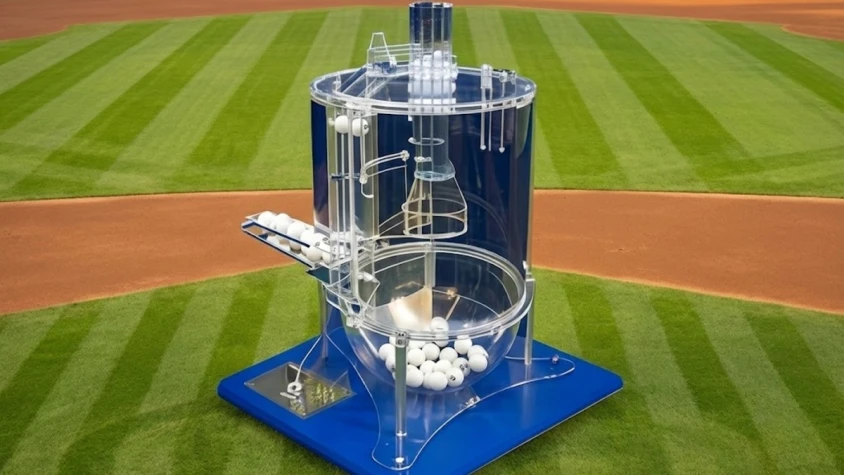
The anti-tanking system that still rewards tanking
The Chicago White Sox won the MLB Draft Lottery and secured the first overall pick in the 2026 draft. They had the best odds at 27.73% after winning just 60 games last season—one of the worst records in modern baseball history. MLB introduced the lottery system specifically to 'deemphasize tanking' by removing guaranteed top picks for the worst teams. Yet here we are in year four, and the team with the worst record and best odds won the lottery. The system changed nothing except adding randomness that occasionally screws teams who tank effectively.
This is only the second time in four lottery years that the team with the best odds actually won the top pick. The Pirates won in 2022 with top odds and selected Paul Skenes. The Guardians were long shots in 2023, and the Nationals had fourth-best odds in 2024. So the lottery creates variance—sometimes bad teams drop, sometimes long shots rise. But ultimately, being awful still gives you the best chance at the top pick, just not the guarantee. That's not discouraging tanking. That's adding gambling to tanking while pretending you've solved the problem.
How the lottery actually works—and why it's pointless
The top six picks are determined by lottery rather than pure record. Teams that aren't revenue-sharing recipients can't get lottery picks in consecutive years, and no team can pick in the lottery three years running. Those restrictions knocked out the Rockies, Nationals, and Angels this year despite their poor records. So the 'solution' to tanking is... preventing some bad teams from benefiting from being bad while still rewarding the worst teams most of the time? That's not fixing tanking incentives—that's creating arbitrary rules that punish some failures while rewarding others.
The White Sox had 27.73% odds—roughly one in four chance. The Twins were second at 22.18%, Pirates third at 16.81%. No other team exceeded 10%. So Chicago had nearly double the odds of anyone except Tampa and Minnesota, and almost triple everyone else's chances. When the worst team still has by far the best lottery odds, you haven't removed tanking incentives—you've just made the reward less certain while keeping the basic structure intact.
Compare this to the NBA's lottery, which has similar problems but at least creates genuine uncertainty about whether tanking pays off. MLB's version is lottery in name but still heavily weighted toward rewarding failure. The White Sox were catastrophically bad, got the best odds, and won. The system worked exactly as it was designed to, which means it failed at its stated purpose of deemphasizing tanking.
The Giants and Royals prove the lottery's only real impact
San Francisco won 80+ games, finished .500, and missed the Wild Card by two games. Kansas City went above .500 for the second straight year. Both ended up with lottery picks—the Giants at #4, Royals at #6. That's the lottery's actual effect: occasionally gifting competitive teams premium picks through random chance while barely impacting tanking incentives for bad teams. Whether that's desirable depends on whether you think good teams deserve top-five picks for finishing mediocre rather than tanking properly.
The Giants lucking into the fourth pick after a .500 season is either 'proof the system works' (competitive teams can get premium talent!) or 'proof the system is broken' (why are we rewarding mediocrity with top-five picks?). Both interpretations have merit. What's clear is this has nothing to do with discouraging tanking—San Francisco didn't tank, they just missed the playoffs and got lucky in the lottery. That's not anti-tanking policy. That's random chance redistributing draft value in ways unrelated to the problem MLB claimed to be solving.
Meanwhile, the Cardinals dropped from eighth-best odds to 13th pick, and the Marlins fell from ninth-best odds to 14th. So some bad teams get punished by variance while others (White Sox) get rewarded. The teams that actually tanked—if we're assuming Chicago's 60-win disaster was strategic rather than organic incompetence—still came out ahead. The system added randomness without changing fundamental incentives. That's not policy success. That's adding complexity that obscures the same basic problems.
What the lottery actually accomplishes versus what it pretends to do
MLB claims the lottery discourages tanking by removing guaranteed top picks for the worst teams. What it actually does: (1) adds variance so tanking doesn't always pay off maximally, (2) occasionally rewards competitive teams with premium picks through luck, and (3) creates arbitrary restrictions on repeated lottery participation that punish some franchises while having no impact on others. None of that addresses why teams tank in the first place—because being bad is often the fastest path to future competitiveness in baseball's economic structure.
Teams don't tank for fun. They tank because baseball's payroll flexibility, lack of hard cap, and draft's historical importance make strategic losing a rational rebuilding strategy. Unless you change those fundamental economic incentives, teams will continue tanking regardless of whether they're guaranteed the #1 pick or merely have the best odds at it. The lottery is cosmetic reform that lets MLB pretend they've addressed tanking without actually changing anything that drives the behavior.
The Paul Skenes comparison that proves nothing changed
This is the second time the team with best odds won the lottery—the first being Pittsburgh in 2022, which yielded Paul Skenes. The Pirates were catastrophically bad that year (62-100), got top odds, won the lottery, and selected arguably the best pitching prospect in recent memory who's already contributing at MLB level. That's the system working exactly as it did before the lottery existed, except with the word 'lottery' attached.
Skenes was the obvious #1 pick in 2023. Pittsburgh tanked (or were just bad organically, the distinction is academic), got rewarded with the top selection, and drafted a generational talent. The lottery changed nothing about that sequence except adding random chance that could have screwed Pittsburgh and given the pick to someone else. They got lucky. But the incentive structure that led to Pittsburgh being terrible in 2022 was identical to pre-lottery years—being awful gives you the best path to premium talent.
The Guardians winning as long shots in 2023 and Nationals winning with fourth-best odds in 2024 proves the lottery creates variance. But variance isn't the same as removing tanking incentives. Sometimes you roll snake eyes. That doesn't mean the game isn't still about rolling dice weighted toward whoever is worst. The White Sox just proved that—60 wins, best odds, lottery winner. The 'anti-tanking' system rewarded them for historical badness exactly as the old system would have, just with extra steps.
Why teams will keep tanking regardless
Chicago's 60-win season was either spectacular organizational failure or deliberate tanking. Probably both—they're bad enough that distinguishing intentional losing from organic incompetence is impossible. Either way, they just got rewarded with the presumptive right to select UCLA's Roch Cholowsky, widely regarded as the 2026 draft's top prospect. That's the same outcome the old system would have delivered, which means the lottery accomplished nothing except adding ceremonial randomness to reward structure that didn't actually change.
Teams will continue tanking (or being strategically patient about rebuilding, if you prefer euphemism) because baseball's economics still make it rational. Draft picks remain crucial for cost-controlled talent. Competitive balance tax thresholds create payroll constraints. Revenue sharing reduces penalties for losing. And crucially—there's minimal competitive difference between picking #1 versus #3 or #4 if you scout and develop properly. The lottery adds variance to draft position but doesn't change the fundamental calculation that short-term losing often produces long-term success.
The restrictions on repeated lottery participation are MLB's attempt to prevent multi-year tanking. But they're easily gamed—finish just bad enough to miss the restrictions, cycle between lottery-eligible and ineligible years, or simply accept that even picking 7th or 8th after lottery restrictions is better than trying to win 75 games and picking 20th. Teams that want to tank will find ways to benefit from the system regardless of cosmetic restrictions designed to make it look like MLB cares about competitive integrity.
What actually discourages tanking and MLB won't do it
The real solution to tanking isn't lottery systems—it's changing the economic incentives that make tanking rational. Implement a hard salary cap and floor so teams can't just pocket revenue sharing while fielding minimum payroll rosters. Create more aggressive revenue sharing that penalizes sustained losing. Make draft picks less valuable by expanding international player access. Change playoff formats to reward more teams so staying competitive becomes more attractive than bottoming out.
MLB won't do any of that because it requires genuine structural reform rather than cosmetic fixes. Owners don't want hard caps limiting their spending flexibility. Small-market teams don't want floors forcing them to spend more. Everyone likes the current system where you can tank a few years, draft well, compete briefly, then tear down and repeat. The lottery doesn't threaten that cycle—it just adds randomness that occasionally screws teams who execute the cycle competently.
The NBA has similar tanking problems despite more aggressive lottery odds flattening. The NFL has less tanking because roster construction works differently and playoff berths are easier to obtain. Baseball's tanking issue stems from its unique economics and roster-building realities. Until those change, teams will keep strategically losing regardless of whether they're guaranteed the #1 pick or merely have a 28% chance at it. The White Sox just proved that mathematical certainty.
The bottom line about fake solutions to real problems
The Chicago White Sox won 60 games, got the best lottery odds at 27.73%, won the lottery, and secured the presumptive right to draft Roch Cholowsky first overall. MLB's lottery system was introduced to 'deemphasize tanking' but the worst team still won the top pick, proving the system changed nothing except adding randomness to outcomes while preserving the exact incentive structure that encourages tanking in the first place.
This is year four of the lottery. Twice the team with best odds won (Pirates 2022, White Sox 2026). Twice long shots or mid-odds teams won (Guardians 2023, Nationals 2024). That variance is the system's only real effect—sometimes it screws teams who tank effectively, sometimes it rewards mediocre teams with luck, but fundamentally the worst teams still have by far the best odds and tanking remains rational strategy for rebuilding franchises.
The Giants and Royals getting lottery picks after winning 80+ games proves the system redistributes premium draft value in weird ways. Whether that's desirable is debatable. What's not debatable: the lottery didn't discourage tanking, didn't change the economic incentives that drive tanking, and didn't prevent the White Sox from being rewarded for catastrophic failure with the draft's top prospect. That's not policy success. That's cosmetic reform that lets MLB pretend they fixed a problem while changing nothing meaningful about the structures that created it. The White Sox just proved it, one 60-win disaster at a time.
MLB draft lottery results
- 1. Chicago White Sox
- 2. Tampa Bay Rays
- 3. Minnesota Twins
- 4. San Francisco Giants
- 5. Pittsburgh Pirates
- 6. Kansas City Royals
- 7. Baltimore Orioles
- 8. Athletics
- 9. Atlanta Braves
- 10. Colorado Rockies
- 11. Washington Nationals
- 12. Los Angeles Angels
- 13. St. Louis Cardinals
- 14. Miami Marlins
- 15. Arizona Diamondbacks
- 16. Texas Rangers
- 17. Houston Astros
- 18. Cincinnati Reds